

Memory allows experience to remain within a person, but memory alone is not enough. One can remember something and still not know how to name it. One can carry whole years of experience inside, returning more as tension than as story. One can feel unease, shame, longing, guilt, loneliness, exhaustion, or grief, and still not yet know what it actually is. One can have images, smells, bodily reactions, fragments of scenes, but until they receive language, it is difficult to organize them, difficult to speak with them, difficult to pass them on to anyone else.
Language, then, appears as the next layer.
Not as an ornament placed on top of ready-made experience. Not as a label attached to a world that had already been fully understood beforehand. Language is not only a way of speaking about what has happened. It is one of the main tools through which experience becomes possible to grasp, share, remember, think through, and change.
In everyday life, we treat language very practically. It serves for asking, answering, explaining, telling, arranging, arguing, apologizing, naming things. “Pass me the water.” “I don’t want to.” “I’m afraid.” “This is a table.” “Let’s meet tomorrow.” “I love you.” “I don’t understand.” In this view, language looks like a tool of communication: something is inside, and then, by means of words, it is transmitted outward.
And of course that is true. But only partly.
Because language does not only carry ready-made meanings. It helps create them. This is very easy to overlook, because words seem transparent. When we say “tree,” “home,” “pain,” “love,” “I,” “guilt,” “freedom,” we have the impression that we are simply pointing to things that already exist. As if the world were a set of ready-made objects and states, and language merely attached names to them. But it is enough to look a little more closely to see that naming something changes the way that thing exists for us in experience.
As long as you do not have a word, something may be present, but blurred. You may feel that “something is wrong,” but only a word allows you to separate one thing from another. This is not only sadness; it is disappointment. This is not only anger; it is the feeling of a boundary having been crossed. This is not laziness; it is exhaustion. This is not indifference; it is freezing. This is not weakness; it is overload. Each such distinction changes the situation. It does not automatically remove it, but it gives it shape. And what has shape can already be held in some way, looked at, communicated, sometimes regulated.
Language therefore works as a tool for dividing the world. Where before there was one fog, differences appear. Where there was only “bad,” an entire map may emerge: I am tired, hurt, frightened, ashamed, lonely, overloaded, hungry, disappointed. And each of these names leads in a different direction. Fatigue may need rest. Shame may need gentleness and contact. Anger may need a boundary. Loneliness may need presence. Fear may need safety. Hunger may need food. If everything is called only “bad,” the system does not know what to do. If we begin to distinguish, the possibility of a response better fitted to the situation appears.
The same applies to the external world. When a child learns words, they are not learning only sounds. They are learning the divisions of the world. That this is a dog, this is a cat, this is foreign, this is mine, this is yours, this is today, this is tomorrow, this is a request, this is a prohibition, this is a promise, this is a lie, this is a joke. Language does not so much throw names onto a ready-made reality as help organize reality into categories that can be recognized and passed on. Thanks to language, the world becomes more shared.
Without language, one can react, feel, recognize, approach, withdraw, learn. Animals do this without our sentences and definitions. An infant, too, lives, feels, and responds before it begins to speak. So the point is not that without language there is no experience. That would be too strong. But language changes the kind of experience. It allows us not only to live through something, but also to say: that was something. It had a name. It can be told to someone else. It can be compared with what you lived through. It can be remembered as part of a story.
Language opens a space between experience and experience itself. This sounds strange, but it refers to something simple. When I experience fear without words, I am more immersed in it. When I am able to say “I am afraid,” a minimal distance appears. I do not stop being afraid, but the fear becomes something I can notice. It is in me, but it does not have to be all of me. I can speak about it. I can ask where it comes from. I can show it to someone. I can distinguish it from fact. Naming is not a magical solution, but it is often the first movement from being flooded toward orientation.
That is why words can calm. Not because they are magical. Rather, because they help the system organize arousal. When someone says to a child, “you got scared because it was loud,” they are not only passing on information. They are helping connect a bodily reaction with a cause and a meaning. The child gradually learns that what is happening inside can be named, understood, and survived. Similarly, an adult sometimes needs to hear a simple sentence: “that sounds like overload,” “that may have been shaming,” “no wonder you are defending yourself.” Suddenly, chaos receives structure. And when chaos receives structure, it does not always disappear, but it stops being absolute.
Language is therefore a tool of regulation. Not the only one, because the body, sleep, touch, breath, movement, relationship, food, and safety still matter. Not every wound can be talked away. Real support cannot be replaced by an elegant description. But language can help the system understand what is happening to it. It can create a bridge between reflex and reflection. Between the body and story. Between what is still undefined and what can be worked with.
But language also has another side.
Because if words organize experience, they can also distort it. They can help us see more, but they can also close down seeing. When you call yourself “a failure,” that word begins to organize memory, attention, and predictions. When you call someone “an enemy,” it becomes harder to see their fatigue, fear, helplessness, or good intention. When you call your needs “weakness,” you will hide them even when they are an ordinary part of life. When you call rest “laziness,” the body may be asking for regeneration, and you will hear accusation.
Words are not innocent. They are small tools, but they can arrange entire fields of experience. One word can open a possibility, and another can close it. “I don’t know how yet” is not the same as “I’m not cut out for this.” “I need help” is not the same as “I am a burden.” “I made a mistake” is not the same as “I am a mistake.” “I was hurt” is not the same as “I am broken.” Grammatically, these are small differences. Existentially — enormous ones.
Because language does not only describe a person. Sometimes it imprisons them.
Very often, suffering is preserved not only by the event itself, but by the sentence that began to explain it. Someone was rejected and remembered not only the pain, but also the conclusion: “I am not worthy of love.” Someone made a mistake and recorded it as: “I cannot be trusted.” Someone lived through chaos and made a rule out of it: “I have to control everything.” Someone was invisible and named themselves “unimportant.” Such sentences are not ordinary thoughts. They become frames through which the organism later reads subsequent situations.
And then language begins to work like a second memory.
We remember not only what happened. We also remember what we called it. And the name can outlive the scene itself. Sometimes we no longer remember the details, but we carry a definition inside: “I am too much,” “I must not be a bother,” “I have to earn it,” “there is something wrong with me.” These are not only sentences. They are condensed maps of the world. They show where one is allowed to go, what one is not allowed to want, what one must fear, how fully one may exist alongside others.
At this point, language meets identity. Because the “I” becomes, to a large extent, something that can be spoken about. Not only something that feels and reacts, but something that can say: this is what I am like, this is what I was like, this is what I want, this is what I fear, this happened to me, this changed me. Language allows us to create a story about ourselves. And a story can hold life together, but it can also narrow it. It can say: I survived. It can also say: I am only a victim. It can say: I am learning. It can also say: I always fail. It can say: I have a history. It can also say: I am condemned to repeat it.
That is why we need to be careful with sentences that sound like final verdicts. “That’s just how I am.” “She will always be like that.” “People never change.” “With me, it can’t be any different.” “That definitely means nothing.” “That definitely means everything.” Such sentences bring relief because they organize uncertainty. The system likes definitions, because definitions reduce chaos. But sometimes we pay for this relief with a narrowing of the world. What began as an attempt at orientation becomes a prison. Language, which was meant to help us live, begins to replace living experience with a ready-made formula.
This does not mean that we should distrust words. Without language, we would not get very far. We could not build shared plans, pass on knowledge, tell stories, create law, literature, science, therapy, prayer, jokes, promises. We could not say “I’m sorry” or “help me.” We could not learn from those who are not beside us, because language carries experience beyond one moment and one body. Thanks to language, a person can draw not only on their own memory, but also on the memory of other people.
Language is therefore also a tool of community. When I tell you what I have lived through, I do not pass the experience itself to you in pure form. You cannot enter my body, my memory, my nervous system. But language creates a bridge. Imperfect, but real. Thanks to it, something from my world can appear in yours. You can understand me a little better. You can respond. You can say: “me too.” You can say: “it was different for me.” You can say: “I didn’t know.” And suddenly experience stops being locked inside a solitary nervous system.
This is one of the most important functions of language: it carries lived experience out of isolation.
A person can suffer wordlessly for a very long time. The body reacts, memory returns, behaviors repeat, but there is no sentence that could show it to someone else. When words finally appear, the possibility of being heard often appears too. Not always. Not everyone listens well. Not every confession is received. But without language, many experiences do not even have a chance to enter the space of relationship. They remain private tension. And private tension that no one understands very easily begins to look like loneliness or a flaw in character.
Naming something can therefore be an act of reclaiming oneself. “That was violence.” “That was neglect.” “That was fear.” “That was the need for closeness.” “That was a boundary.” “That was exhaustion.” Such sentences can change the arrangement of an entire story. Not because they change the facts. Because they change their place in meaning. Something that was once personal guilt can be recognized as a reaction to conditions. Something that was shame can become harm. Something that was “strangeness” can turn out to have been a survival strategy. Something that was chaos can become a signal.
But here, too, we need caution. Because language can offer explanations that are too easy. It can close something too soon, something that would still require patient contact. One can name oneself with a diagnosis and stop seeing the rest of the person. One can name someone’s behavior with a single concept and stop listening to the details. One can use grand words in order not to feel simple things. One can hide helplessness under theory. One can cover living experience with an elegant description.
Not every naming is understanding.
Sometimes a word truly lands. Sometimes it only pretends to. Sometimes it organizes, and sometimes it cuts off. Sometimes it allows us to see, and sometimes it protects us from seeing. That is why our relationship to language has to be double: deep respect and a certain distrust. Respect, because without words many things could not become part of awareness and relationship. Distrust, because no word is the same as the whole experience.
The word “pain” is not pain. The word “love” is not love. The word “I” is not the whole person.
And yet without these words, it would be difficult to grasp anything at all.
This tension cannot be removed. Language brings us closer to experience and, at the same time, moves us away from it. It gives form, but every form leaves something out. It allows us to speak, but what is spoken is never the whole of what has been lived. That is why, after a long explanation, we sometimes say: “that is not quite it.” And we are right. No sentence can fully carry the weight of a single life. But without sentences, that weight often remains completely alone.
Perhaps, then, language is not a mirror of experience, but its working tool. It does not show everything, but it allows us to work with something. It arranges fragments. It creates distinctions. It builds bridges. It allows us to return to the past and ask what it means. It allows us to imagine the future and prepare for it. It allows us to say “no” and “yes.” It allows us to promise, refuse, confess, mourn, explain, hide, reveal, wound, and repair. It is one of the most powerful ways in which a human being influences themselves and others.
Because words do not remain only in the air. Words change the body. One sentence can calm the breath or quicken the pulse. It can relax the face or tighten the throat. It can restore someone’s sense of dignity or take it away. It can open a conversation or end a relationship. It can allow someone to stop feeling ashamed, or deepen shame for years. That is why language is not light simply because it is immaterial. A word is an event in the nervous system.
This is especially visible in childhood. A child receives from the world not only food, touch, and protection. The child also receives words about themselves. “You are well-behaved.” “You are difficult.” “You’re exaggerating.” “You can do it.” “Don’t cry.” “I am here with you.” “There is always something with you.” “It’s normal that you’re afraid.” Such sentences are not neutral background. Gradually, they become the material from which the child builds the language of their own interior. Over time, the voice from outside can become a voice inside. A person begins to speak to themselves in words they once heard from others.
And here language becomes inner dialogue.
Even when we are silent, something often speaks inside. It comments, plans, predicts, accuses, soothes, explains, rehearses conversations, creates scenarios. This inner voice is not the whole of thought, but it is one of its important forms. Sometimes it helps us maintain direction. Sometimes it offers support. Sometimes it becomes a constant tribunal. Sometimes it repeats old sentences that no one outside says anymore, but which still work as if someone were standing next to us.
This shows that language is not only between people. It is also inside a person. A person partly becomes an interlocutor for themselves. They can question themselves, calm themselves, frighten themselves, mobilize themselves, shame themselves, encourage themselves, stop themselves. They can say: “let’s try again” or “you ruined everything again.” They can say: “this is difficult” or “you are hopeless.” They can say: “I need rest” or “I have no right to be tired.” These inner sentences are not just private commentary. They influence attention, memory, the body, and action.
That is why a change in language can be a change in the inner world. Not through artificial positive slogans. Not through telling oneself something the system does not believe. Rather, through gradually finding words that are more accurate, more honest, and less harmful. Instead of “I am lazy” — “I am overloaded and avoiding because I do not have the resources.” Instead of “no one wants me” — “I am afraid I will be rejected again.” Instead of “I have to be strong” — “I learned that I cannot count on help, but perhaps now it is worth checking.” Such sentences are not soft decoration. They are more precise maps.
And a more precise map can lead to a different movement. If I call myself lazy, I will punish or force myself. If I call myself overloaded, I can look for rest, structure, help, a smaller step. If I call my fear the truth about the world, I will defend myself. If I call it a signal from an old protective system, I can check the situation. If I call the need for closeness weakness, I will hide it. If I call it a need, I can recognize it as part of being human.
Language does not solve everything, but it changes the kind of response that becomes available.
In this sense, language is an engine of meaning. Not because it creates the world out of nothing. Not because thinking is exclusively language. There are images, sensations, movements, intuitions, tensions, and recognitions that appear before words or alongside words. A human being is not a sentence machine. But when words appear, they begin to organize what has been lived in a particular way. They provide a category. They create a relationship between events. They make it possible to ask: “why?”, “for what?”, “what does this mean?”
And meaning is something more than information. Information says that something happened. Meaning says what it does to my world. Someone left — that is information. “I was abandoned,” “I lost someone important,” “a certain chapter ended,” “I was not loved,” “I have to learn to live differently” — these are meanings. One event can carry many possible meanings. Not arbitrary ones, because facts resist, but not completely closed ones either. Language is the place where these meanings begin to arrange themselves.
That is why the struggle over words is often a struggle over reality. In relationships, families, societies, cultures. Do we call something punishment or upbringing? Violence or conflict? Rest or laziness? Boundary or selfishness? Obedience or safety? Sensitivity or exaggeration? These names are not merely descriptions. They arrange responsibility, emotions, and possible actions. If something is called “normal,” it becomes harder to question. If something is called “harm,” the possibility of protection appears. If something is called “weakness,” shame appears. If it is called “a need,” care may appear.
Language, then, is not a private toy of the mind. It is also a structure of power and community. But here we do not yet have to enter deeply into politics, culture, and large social systems. For now, it is enough to see the basic movement: a person needs language so that experience can become meaning. So that the body can say something more than alarm. So that memory can become story. So that relationship can move beyond gesture and tone. So that the “I” can not only exist, but also ask who it is.
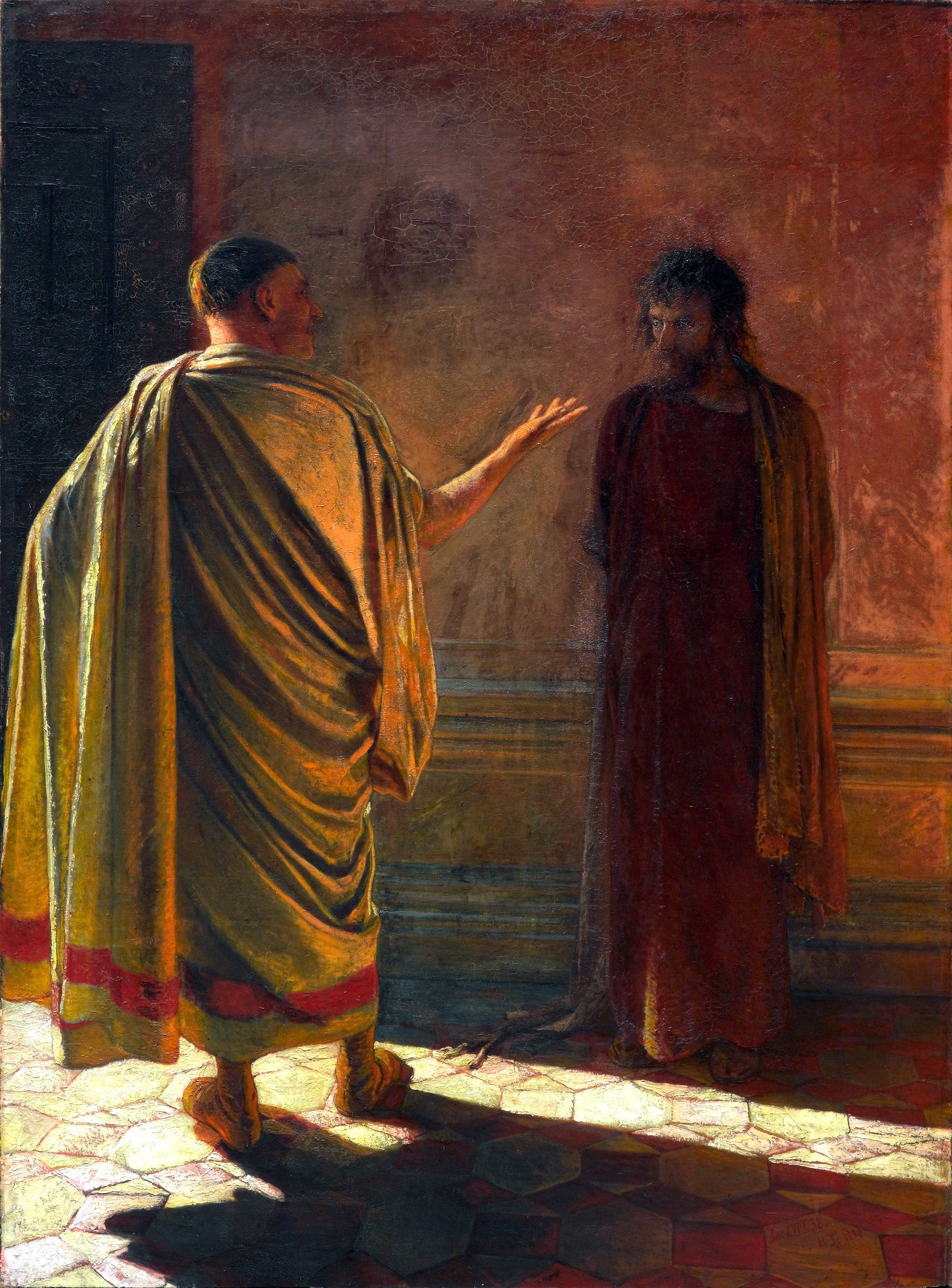
And here we arrive at the limit of language. Because language can do a great deal, but not everything. There are experiences that outrun words. There are moments when speech seems too small. Awe, trauma, love, mourning, pain, silence, the presence of another person — sometimes every sentence sounds like a simplification then. This does not mean language is useless. It only means that it is not the master of all experience. It is one of its tools, not the whole of life.
A human being therefore needs two abilities at once: the ability to name, and the ability to respect what cannot be fully named. Without the first, we remain in chaos. Without the second, we begin to confuse words with reality. Mature language does not mean that everything is finally explained. It means, rather, that we can create words good enough not to be completely lost, and humble enough to know that they do not exhaust the world.
We might put it this way: language is the process through which experience is named, divided, connected, and transmitted. Thanks to it, the world is not only a stream of stimuli, and memory is not only a collection of traces. They become something one can think about, tell, question, share, and sometimes transform.
Language is not the whole of thinking.
But it opens one of the most important paths of thinking. Because once we have attention, which selects; perception, which assembles; memory, which binds time; and language, which gives meaning — the next step appears. A person can begin to do something even more complex. They can simulate. They can predict. They can speak with themselves. They can create scenarios, worry, plan, imagine the future, and try to gain control over what does not yet exist.
And that is where the next text leads us: toward thinking as an inner movement between memory and the future.