

In the mid-9th century, the lands of the Slavs were a space of contending political and spiritual forces. Great Moravia—a young but ambitious West Slavic state—sought to find its place among powerful neighbors: Byzantium to the east and the Franks to the west. It was a time when politics and religion were inseparable, and the language of liturgy held the key to both spiritual and cultural independence

Prince Rastislav, a ruler marked by political foresight and spiritual intuition, understood well that a truly independent identity could not be built without a language of faith that was one’s own. Latin—the language of the Western Church, brought by German missionaries—was foreign to his people, incomprehensible, almost arcane. It was the language of ritual, but not the language of the heart. The Slavic soul yearned for the sacred to speak in its own voice—a voice rooted in the land, in the sounds of daily life, in the whispered prayers beside the household hearth.
It was for this reason that Rastislav turned toward Constantinople—the second great center of Christianity, where imperial and ecclesiastical power were intertwined in a rich and complex culture. He sent envoys to Emperor Michael III with a request that was unusual for its time: he did not ask merely for teachers of the faith, but for men who could speak in a language the people would understand. It was a request that was simultaneously spiritual, political, and cultural—a gesture of courage and a deep awareness of the power of the word
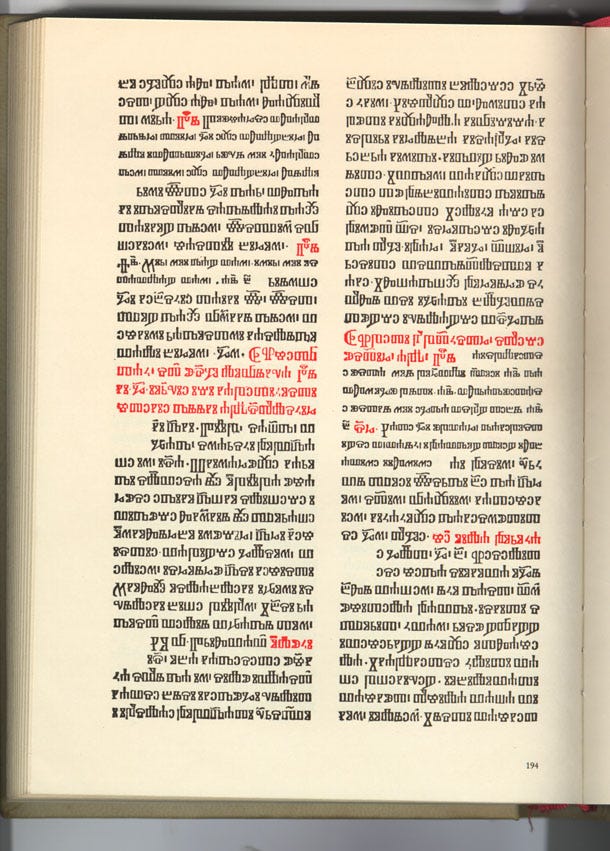
In Byzantium, the choice fell upon two extraordinary men— brothers from Thessaloniki, Constantine and Methodius. Constantine, later known as Cyril, was a remarkable figure: a philosopher, scholar, and man of brilliant intellect, he combined the logical precision of a thinker with a mystical intuition that allowed him to see deeper—not only into words, but into the spirit within them. Methodius, once an imperial administrator, had chosen the path of a monk, turning from public life toward contemplation, spiritual discipline, and missionary work. Thessaloniki, their birthplace, was a city where many cultures, languages, and religions coexisted. It was a borderland—an ideal crucible for the formation of future missionaries
And so, in the year 863, when the brothers set out for Great Moravia, it was not merely a missionary journey, but a mystical one. They carried with them not only the teachings of Christ, but something even more precious—the promise that spirituality could speak in the language of those it sought to reach. Their arrival in Moravia marked a turning point—the beginning of something that would eventually extend far beyond political or ecclesiastical boundaries
It was the moment of birth for an alphabet that was not merely a tool for writing, but a bridge between heaven and earth—a next stage in the spiritual transformation of the Slavs, one that would echo through the centuries.
This fragment comes from my work-in-progress book. As I move forward with the project, I plan to share various pieces of it to give readers a glimpse into the world I’m creating. If you enjoy this material, you can access the current version of the book through a paid subscription. And if you feel drawn to the project and would like to help shape its future, I’d be delighted to collaborate with you. :)