

The mission of Cyril and Methodius was a profound spiritual success, though on the political and ecclesiastical level, it met with resistance almost immediately. The German clergy, long established in the western Slavic lands, could not accept the idea of Christianity speaking to people in their own local language. The Slavic liturgy— though officially approved by Pope Adrian II—was seen by many as a threat. It disrupted the established order based on Latin: a universal, yet elitist language, closed to the common people.
Cyril’s death in Rome in 869, followed by Rastislav’s fall from power, left Methodius almost entirely alone in his mission. Eventually, after Methodius died in 885, his students were expelled from Moravia by German clergy who viewed the Slavic liturgy as a danger—or even heresy. Paradoxically, however, this expulsion became the very impulse that allowed Glagolitic to cross new borders—both geographic and symbolic.
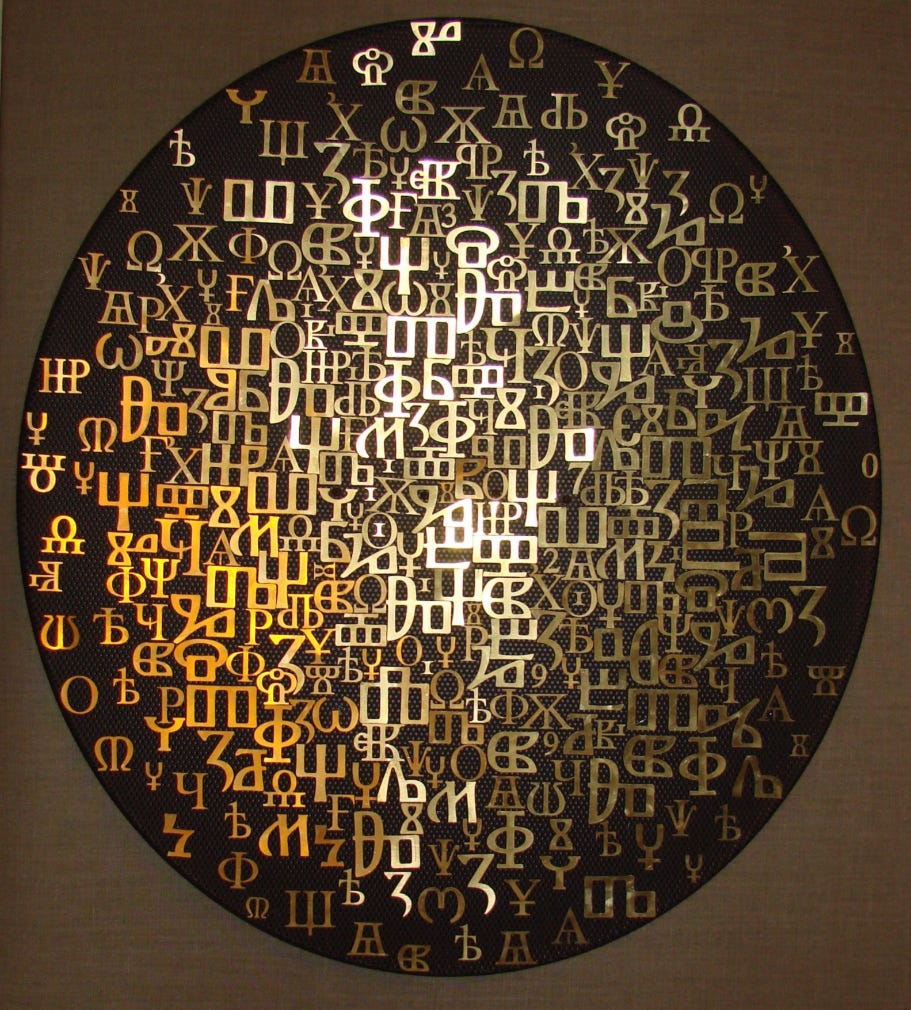
Scattered across the region, the disciples—led by figures such as Clement of Ohrid and Nahum—journeyed southward to the Balkans, particularly to Bulgaria, Croatia, and Macedonia—the heartlands of Southern Slavic culture. It was there that Glagolitic found new life—not as a threat to Latin dominance, but as a spiritual legacy of local communities. The alphabet, born at the crossroads of Eastern and Western cultures, survived in liturgy for centuries, gradually attaining a sacred status.
It is in this symbolic and spiritual dimension that the full depth of Cyril and Methodius’s work reveals itself. Their alphabet was more than a tool of mission—it became a symbol of the encounter between two great traditions of Christianity. On one side, the alphabet drew from the legacy of the West: Latin precision, symbolic structure, the theology of Augustine, and the clarity of scholastic thought. On the other, it was deeply grounded in Eastern spirituality—iconic mysticism, contemplative prayer, and the symbolic richness of Byzantine theology.
Yet its true uniqueness lay in the fact that neither tradition overshadowed the Slavic essence of the alphabet. Though it drew inspiration from many sources, Glagolitic remained, at its core, distinctly Slavic—rooted in a worldview that connected the sacred with nature, sound with sign, word with silence. In the forms of the letters, in their geometric balance, one could sense the living presence of Slavic intuition: a vision of the world as harmonious and whole, where every sign had its place, every meaning its subtlety, and every shape its spiritual resonance.
Cyril and Methodius created an alphabet that was at once Western and Eastern—rational and mystical, pragmatic and contemplative. Within the very shapes of the letters was inscribed both the tension and the harmony of cultures that seldom found common language. Glagolitic thus became a symbol that Christianity could speak to every people in their own tongue—that the sacred need not be confined to a single canon of form or spiritual tradition.
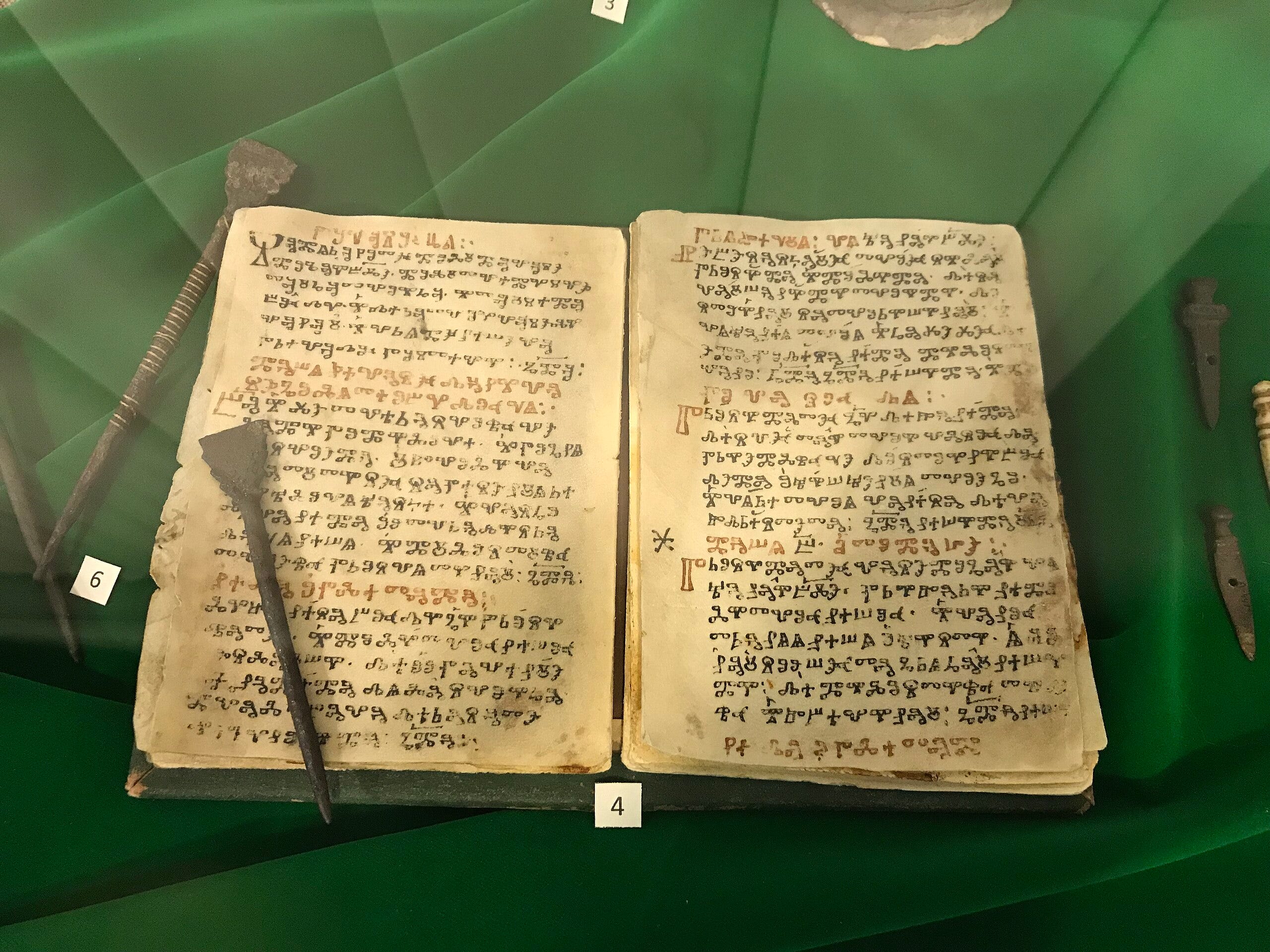
Today, with the benefit of historical distance, we can see Glagolitic as something far more than a historical curiosity. It is an alphabet-symbol—a bearer of memory, of the courage required for spiritual dialogue, of the willingness to cross boundaries, and of the respect for local cultures. It is also a reminder that the letter—the sign—is not merely a tool for recording, but can also be a place of spiritual encounter, meditation, and contemplation.
Although Glagolitic never came to dominate the Slavic world as Cyrillic or Latin script did, it endured as a subtle sign of memory—a spiritual legacy pointing to the power of the symbol and the meaning of a language of one’s own spirit. That legacy— though now nearly forgotten—may return not as a script of everyday use, but as a source of inspiration: a prompt to seek a language of the soul, one that every people and every culture needs in order to express what is deepest, most intimate, and most universal within them.
This fragment comes from my work-in-progress book. As I move forward with the project, I plan to share various pieces of it to give readers a glimpse into the world I’m creating. If you enjoy this material, you can access the current version of the book through a paid subscription. And if you feel drawn to the project and would like to help shape its future, I’d be delighted to collaborate with you. :)