

The symbolism of the two alphabets—Glagolitic and Cyrillic—reveals more than just historical differences in their usage. It touches on a deeper Slavic understanding of the world as a harmony of opposites, a coexistence of the visible and the hidden, the everyday and the mysterious. In Glagolitic, we see a clear reflection of the Slavic intuition for spirituality, where letters are not only sounds, but cosmic signs—constructed from forms that carry their own symbolism and spiritual quality.
The basic geometric symbols around which Cyril built his alphabet—the cross, the triangle, and the circle—continue to fascinate modern scholars and artists. Each Glagolitic bukva, rooted in these forms, suggests a symbolic depth that cannot be reduced to simple phonetic function. The cross, a meeting point between the earthly and the divine, evokes the metaphor of spiritual awakening and reconciliation. The triangle—an eternal symbol of harmony and divine fullness—brings into the script the idea of perfection, unity within diversity. The circle—symbol of infinity and wholeness—closes the conceptual cycle of each letter, echoing the Slavic soul’s belief in the eternal recurrence of life, death, and rebirth.
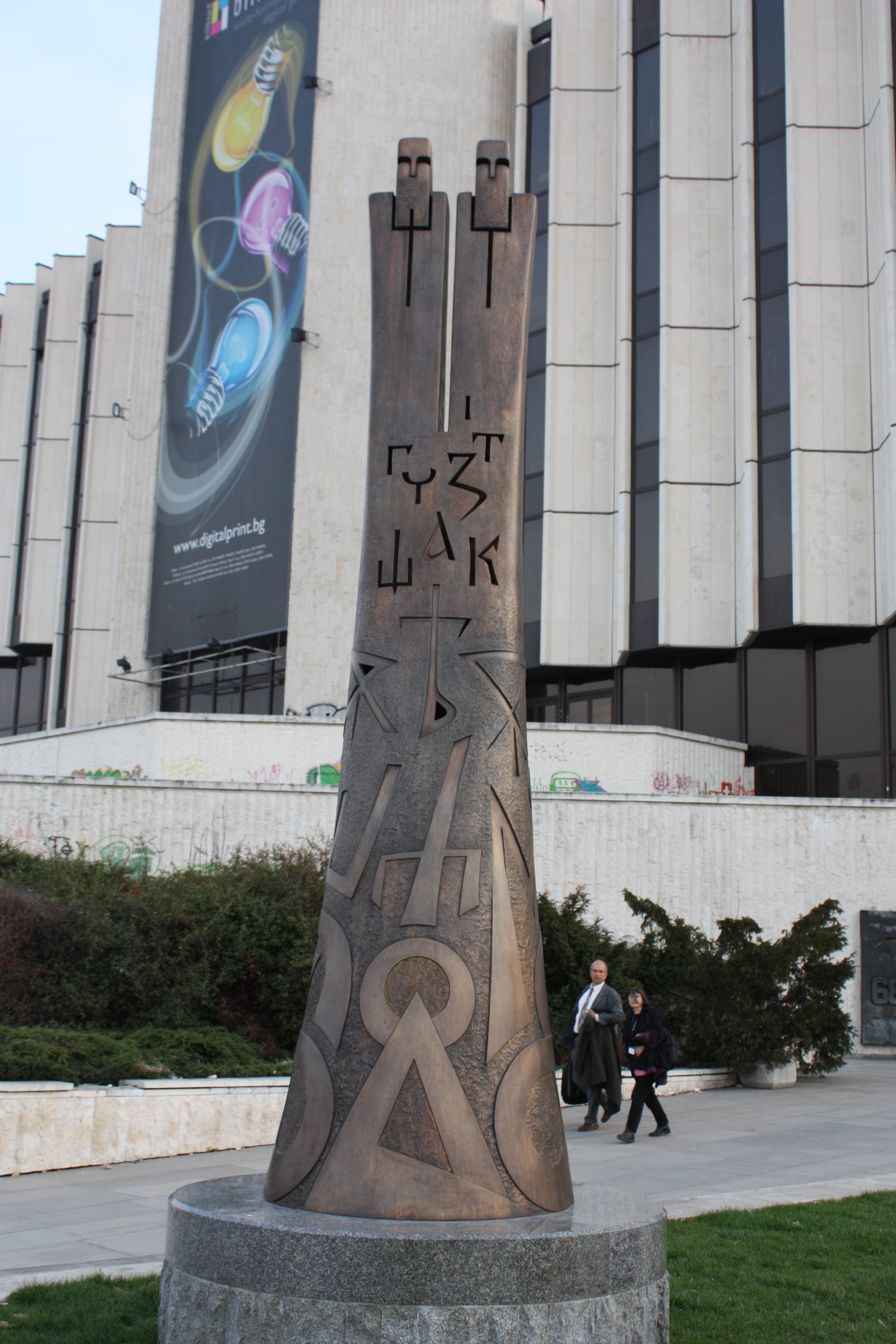
In Glagolitic, each letter was not only a phonetic symbol, but a spiritual figure, an ideogram—a being with numerical and visual quality. The system was more enclosed, sacred, and mysterious—it resembled a ritual labyrinth, where every indentation in a sign concealed meaning to be read not with the voice, but with the heart. Cyrillic, by contrast, was more practical, open, secular. If Glagolitic initiated the reader into meaning and led them inward, Cyrillic opened a pathway of communication—clear, linear, functional. Each fulfilled a different role: one was like a whispered prayer, the other like public speech.
In some parts of the Slavic world—particularly in Croatia— Glagolitic survived in liturgical use until the 20th century, maintaining the status of a sacred script. Yet its liturgical role reached beyond the southern Slavs. In Poland too, albeit briefly, prayers written in Glagolitic echoed—such as in Kraków, at the Benedictine monastery in Kleparz founded by Queen Jadwiga, where Masses were at one time conducted in Old Church Slavonic according to the Cyrillo-Methodian tradition. Similar traces appear in Silesia. Though brief, these moments left a lasting mark: even in Western Slavic lands long connected to Rome and Latin, Glagolitic’s rhythm once quietly breathed.
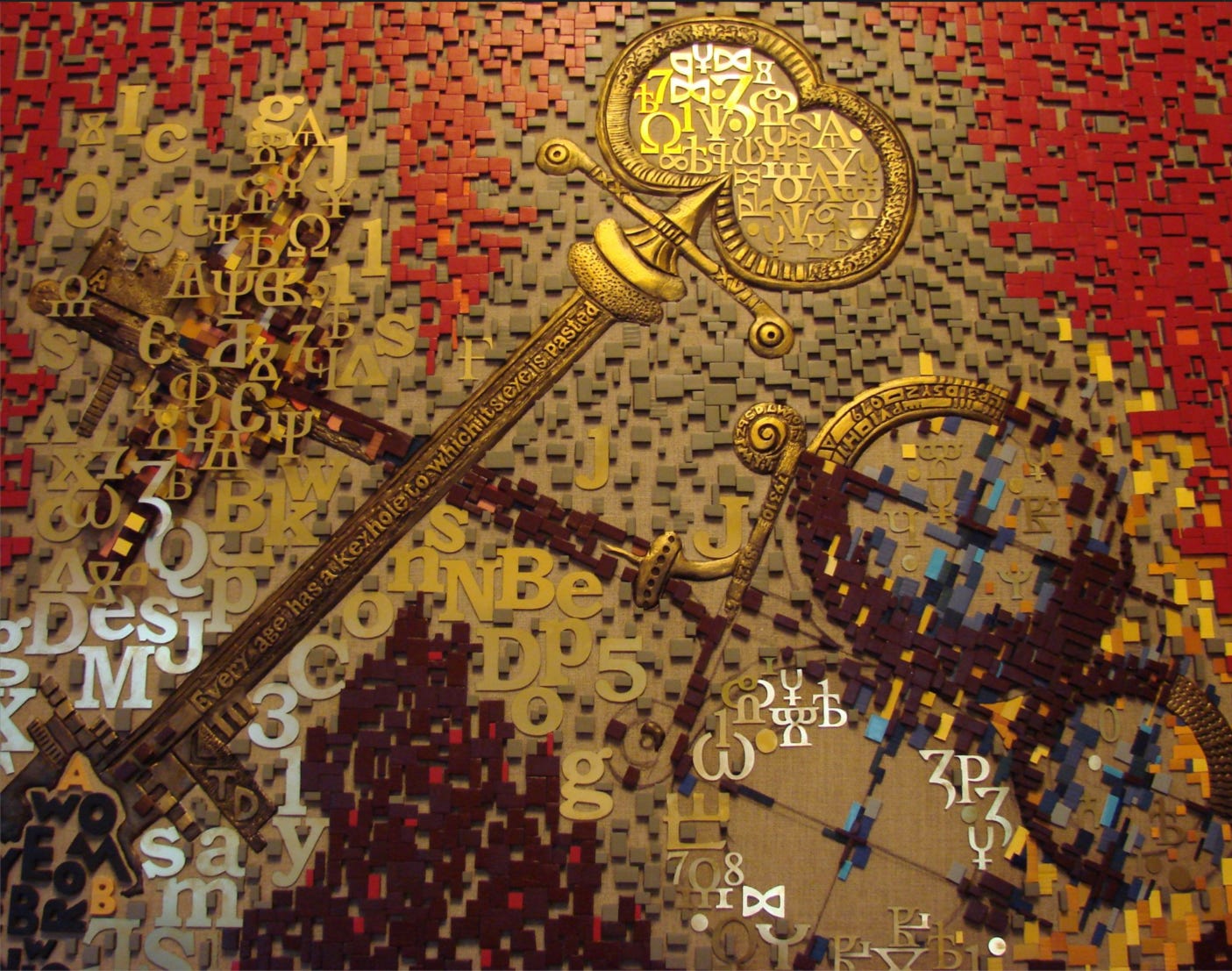
In practice, many Slavs used both writing systems depending on context. Cyrillic served everyday life—administration, education, historical record. Glagolitic, meanwhile, was reserved for the mystical realm—liturgy, rituals, monastic manuscripts, and occasionally magic and apocryphal texts. This division reveals two distinct approaches to the sign: one saw it as a tool, the other as a revelation. Within that duality lay the entire drama and richness of Slavic culture—the ability to distinguish between speech and silence, between what must be understood and what is enough to sense.
This continued coexistence of the two alphabets—one symbolic, spiritual, nearly esoteric; the other practical, rational, and open—is living proof that Slavic culture still draws from that ancient, fascinating duality. Today, perhaps more than ever, Slavs can appreciate the value of having two alphabets—two ways of seeing the world that do not exclude one another, but rather enrich each other.
Perhaps it is precisely through this duality of alphabets that Slavic spirituality retains its unique sensitivity: the ability to move between the practical and the mysterious, between the expressible and the ineffable.
This fragment comes from my work-in-progress book. As I move forward with the project, I plan to share various pieces of it to give readers a glimpse into the world I’m creating. If you enjoy this material, you can access the current version of the book through a paid subscription. And if you feel drawn to the project and would like to help shape its future, I’d be delighted to collaborate with you. :)