

The introduction of liturgy in a language understood by the people—initiated by Cyril and Methodius—was one of the most revolutionary and courageous moves in the entire history of medieval Christianity. Until the 9th century, it was widely accepted in Europe that only certain languages were worthy of speaking about God—namely, those present in the Holy Scriptures. This gave rise to the doctrine of the three “sacred languages”: Hebrew, Greek, and Latin. Each carried unique symbolic significance— Hebrew as the language of the prophets and the Old Testament; Greek as the language of the Gospels, philosophy, and Eastern theological tradition; and Latin as the language of empire, law, the Church, and doctrinal unity. Within this tripartite structure of spiritual authority, there was no room for local languages, which were considered insufficient, too simple, too mundane to bear divine truth.
When Prince Rastislav asked Byzantium to send teachers who could proclaim the Gospel in the Slavic language, he took a step that was as much political as it was spiritual. He understood that liturgical language was not just a tool for conveying faith—it was a sign of cultural independence and spiritual identity for his people. Rastislav’s decision challenged the dominance of the Latin Church, but above all, it was a call for Christianity to become genuinely close to the Slavs—not something imposed from above, but something that could express their inner world.
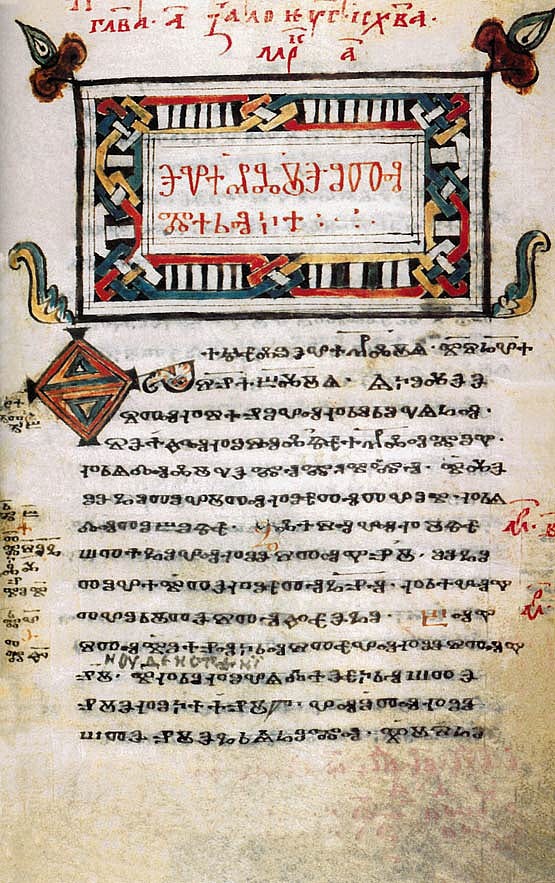
Cyril and Methodius responded with boldness and vision. Rather than forcing the Slavs to conform to existing sacred languages, they chose to create a new, liturgical language specifically for them. It was a gesture that was not only pragmatic but deeply symbolic—affirming that every people has the right to express their spiritual life in their own voice, in their own melody, rhythm, and linguistic structure.
This decision, though it may seem obvious today, was at the time more than courageous—it was, for many, outright heretical. Cyril and Methodius dared to break with a centuries-old Church tradition by questioning the idea that liturgical language should be reserved for the elite. Their choice disrupted not only the religious order, but also the entrenched social hierarchy. Liturgy in the Slavic language allowed ordinary people—farmers, craftsmen, even the illiterate—to fully participate in spiritual ritual. It was an act that democratized spirituality, placing the sacred in the hands of all— not just those with access to classical languages.
At the same time, it was a declaration that Slavic spirituality did not need a foreign form in order to express itself. By choosing the Slavic language, Cyril and Methodius affirmed that the people already possessed within themselves the resources to articulate the full complexity of spiritual experience. In doing so, they opposed the dominant idea of the time—that spirituality must be filtered through languages already sanctified by the authority of tradition.
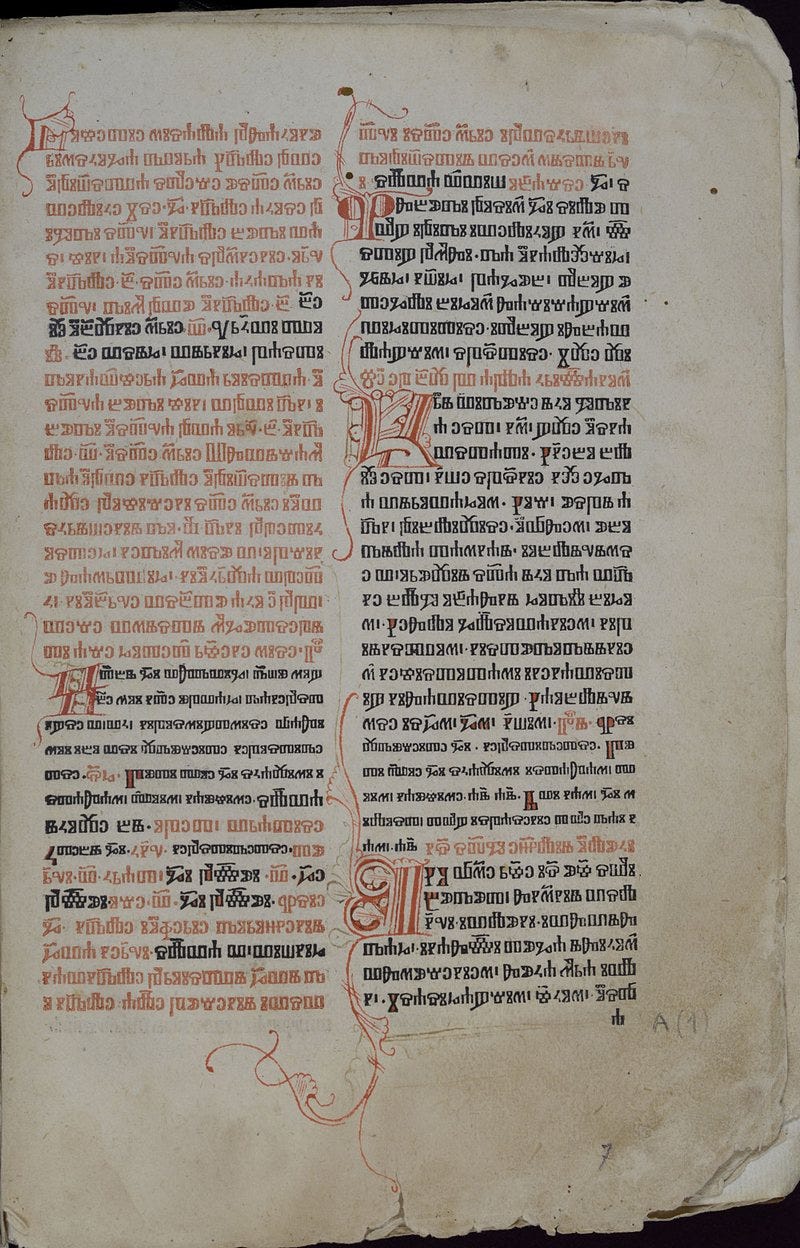
This revolutionary decision carried immense cultural, social, and spiritual significance. It opened a space for the Slavs to express themselves, for the first time, as a spiritual community—one with its own words, concepts, metaphors, and symbols. Liturgy in the Slavic language became the beginning of a great spiritual self awareness—one that no longer had to look outward for validation. It was the first step toward spiritual autonomy—a testament that the sacred does not require a foreign tongue in order to be true.
Yet the introduction of the Slavic language into liturgy did not reject the universal nature of Christianity. On the contrary— through careful translation of the Gospels and the liturgy, Cyril and Methodius demonstrated that the spiritual truths of Christianity are so universal that they can be spoken in any language, in any culture. This act made the Slavs full participants in the great Christian community, while also allowing them to preserve their cultural and spiritual distinctiveness.
It was an act of courage that carried enormous risk—the risk of misunderstanding, of conflict, of accusations of heresy. But precisely for that reason, it was also an act of deep spiritual and cultural awareness—one that would shape the identity of the Slavic peoples for generations to come.
This fragment comes from my work-in-progress book. As I move forward with the project, I plan to share various pieces of it to give readers a glimpse into the world I’m creating. If you enjoy this material, you can access the current version of the book through a paid subscription. And if you feel drawn to the project and would like to help shape its future, I’d be delighted to collaborate with you. :)
Absolutely brilliant framing of Cyril and Methodius's work as both political and spiritual insurgency. The tripartite languag structure you describe was basically a gatekeeper mechanism, and breaking it open wasn't just about translation but about who gets to hold sacred knowlege. I've noticed similar patterns in how vernacular movements always threaten establishd hierarchies. The genius here was showing that spiritual depth doesnt require foreign containers to be authentic.