

The introduction of Old Church Slavonic into the liturgy held significance far beyond linguistic or political dimensions—it was, above all, an event of profound spiritual and symbolic importance. From that moment, the Slavs could participate in the sacred reality of Christianity in their own voice, creating a new, unique space for spiritual experience. Liturgy was no longer a foreign ritual—it became something personal, close, and intimate. Old Church Slavonic became a language through which the soul could encounter the sacred directly—without intermediaries and without the need to “translate” spiritual experience into foreign categories.
In this way, liturgical language became more than a vehicle for religious content—it became a space of spiritual meaning. Spoken words were no longer mere descriptions of God or divinity; they became a spiritual dialogue, a living encounter with the holy that unfolded within each individual. Liturgy thus began to operate not only on the level of words and meanings, but also through intuition, emotion, and inner mystical experience. Every word of the Slavic liturgy carried not only intellectual clarity, but also a deep, intuitive spiritual resonance—inseparably linked to the Slavic way of feeling and perceiving the world.
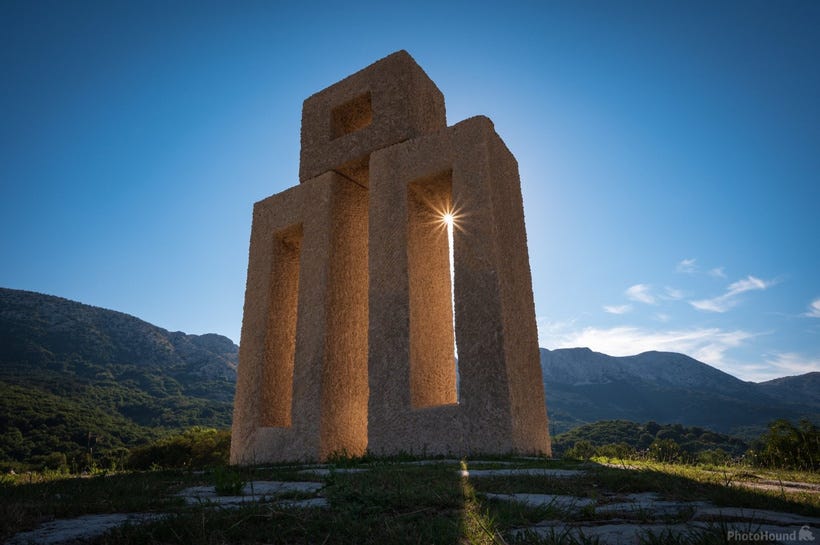
In practice, this meant that the Slavs began to experience religion not merely as a system of ritual or doctrine—but as a reality that was emotional and symbolic. The spiritual symbols of Christianity—light, fire, water, bread—were translated into a language that resonated with their own traditions, rites, and pre Christian beliefs. It was Old Church Slavonic that enabled a seamless fusion of two spiritual worlds: the universal message of Christianity and the Slavic sensitivity to nature, ritual, and symbol. This language became a medium that did not erase local spirituality, but transformed and enriched it—allowing it to find new depth and dimension.
Symbolically speaking, Old Church Slavonic created for the Slavs a kind of spiritual sanctuary—a space in which they could develop their own inner awareness, independent of external political or cultural forces. Thanks to Cyril and Methodius, liturgy became a practice of spiritual introspection, a place where the Slavic soul could come to know itself, to discover its own symbols and metaphors through which it could express its deepest longings and intuitions. Slavic spirituality began to evolve as a unique, autonomous order—one that no longer required intermediaries in the form of foreign languages or traditions, because everything needed for spiritual experience was already present in their own language.
Old Church Slavonic enabled the Slavs to construct a new spiritual identity—autonomous, yet fully integrated within the Christian universe. The liturgy became a tool of social cohesion, a reinforcement of communal bonds, but most importantly—a means of deep self-discovery. From that point onward, the spiritual language was not only a way of speaking about God, but a way of discovering God within—within one’s culture, within one’s daily life.
Old Church Slavonic was not merely a sacred language—it was the language of the Slavic soul. It opened the door to a new dimension of spiritual life—one that was no longer a passive reception of doctrines from the outside, but an active co-creation of the sacred. Liturgy in one’s own language affirmed that spirituality is not something that is “imported”—it is something that is discovered, built, and deepened from within, through one’s own voice, word, and symbol.

This symbolic dimension of the language continues to this day as one of the most distinctive features of Slavic religious culture. Even modern revivals of Old Church Slavonic in Orthodox liturgies, sacred music, poetry, and art demonstrate how deeply it is rooted in the spiritual DNA of the Slavs. This language remains a space of contemplation, intuition, and inner knowledge—a lasting reminder that the sacred never exists in the abstract, but is always grounded in the concrete cultural and symbolic experience of the human being.
This fragment comes from my work-in-progress book. As I move forward with the project, I plan to share various pieces of it to give readers a glimpse into the world I’m creating. If you enjoy this material, you can access the current version of the book through a paid subscription. And if you feel drawn to the project and would like to help shape its future, I’d be delighted to collaborate with you. :)