

The introduction of Old Church Slavonic into the liturgy was a pivotal moment—but it was only through writing, through the Glagolitic script created by Cyril, that this language could truly withstand the test of time and become a lasting element of the Slavic spiritual identity. Glagolitic was not merely an alphabet for recording sounds—it was a symbol of giving the sacred language a material form, an act of anchoring the word in time and space, preserving the spiritual voice for future generations.
In the medieval world, writing held a special meaning. It was a sign of permanence, stability, and above all, sanctification of the words it carried. What was written became, in a sense, eternal— protected from forgetfulness, distortion, or loss. By creating Glagolitic, Cyril deliberately gave Old Church Slavonic a timeless dimension. Each inscribed letter was both a symbol and a sign of spiritual order—meant to endure within Slavic consciousness as something unshakable and sacred.
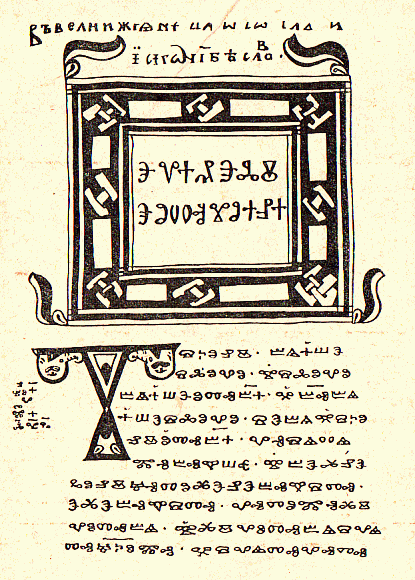
As a spiritual alphabet, Glagolitic was never merely a practical tool—it possessed a deeply symbolic structure. The shapes of its letters—full of crosses, circles, and triangles—were not accidental. Cyril, well-versed in both Eastern and Western mystical traditions, embedded geometric elements into his script that, in medieval symbolism, represented perfection, divinity, and cosmic harmony. In this way, Glagolitic did not merely record words—it consecrated them, inscribing them into a sacred order of symbols, rhythms, and meanings. Each letter became not just a sound-sign, but a spiritual symbol, a meditation on the sacred—an icon written in ink on parchment.
Through Glagolitic, the Slavic liturgical language was transferred from the spoken realm—ephemeral, impermanent, vulnerable to change—into the written realm: lasting and eternal. The transcription of the liturgy allowed it to endure in unaltered form, preserving both the accuracy of its message and the integrity of its spiritual meaning. Slavic liturgical manuscripts thus became not only prayer books, but repositories of spiritual memory—a kind of archive of cultural and religious identity.
It was writing that ensured the Slavic liturgy did not become a f leeting episode in history, but instead grew into a lasting and profound tradition, passed down from generation to generation. Thanks to Glagolitic, the liturgy ceased to be something external, temporary, or imposed—it became an integral part of the Slavic spiritual world, woven into its culture, customs, and collective consciousness.
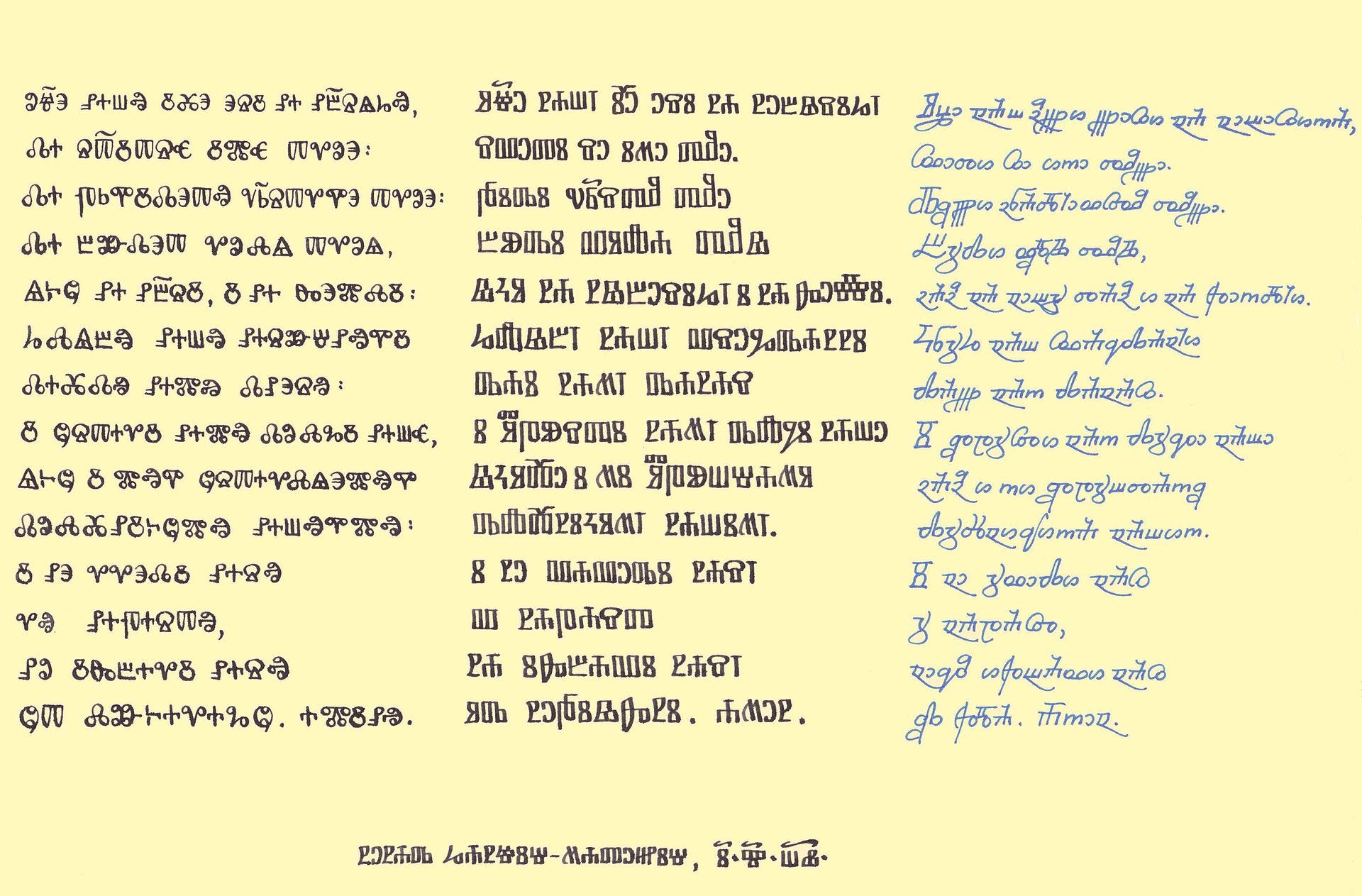
For medieval Slavs, the written word held almost magical value—it was something real, enduring, existing beyond the limits of memory or subjective interpretation. The transcription of the liturgy in Glagolitic was thus also an act of deep reverence for the sacred content—what was seen as most valuable, holy, and worthy of preservation. Cyril’s alphabet created a space in which the spiritual word could survive, regardless of political, social, or cultural upheavals.
This unique union of liturgical language and writing became the foundation of Slavic cultural endurance, providing a tool through which they could preserve their spiritual autonomy even in times of historical change. As a result, Glagolitic and Old Church Slavonic formed an inseparable tandem—alphabet and language, symbol and meaning—together constituting a manifesto of spiritual independence and universal sacred value.
Just as Old Church Slavonic was the language of the Slavic soul, Glagolitic became its enduring record, its spiritual signature—a seal affirming that the Slavs were not merely recipients of faith, but 26 27 active creators of their own sacred tradition. Through this tandem, the written word gained the status of a symbol—one that protected the spiritual identity of the Slavs from being forgotten or erased by time.
This fragment comes from my work-in-progress book. As I move forward with the project, I plan to share various pieces of it to give readers a glimpse into the world I’m creating. If you enjoy this material, you can access the current version of the book through a paid subscription. And if you feel drawn to the project and would like to help shape its future, I’d be delighted to collaborate with you. :)