

Although the mission of Cyril and Methodius began in the West—in the very heart of Great Moravia—it was there, paradoxically, that it was silenced the fastest. “The lost voice of the West” is a metaphor referring to the fate of the Slavic liturgy in the Western Slavic lands—where it was born, yet could not endure. Its demise was entangled in a complex web of political, religious, and cultural forces that ultimately led to the rejection of what could have become the foundation of the spiritual autonomy of the Western Slavs.
After Cyril’s death in Rome in 869, the burden of continuing the mission fell entirely on Methodius, who had been officially recognized by the Pope as Archbishop of Pannonia. However, his situation quickly became dire. German clergy—especially bishops from Regensburg, Salzburg, and Passau—viewed the Slavic liturgy as a direct threat to Latin orthodoxy, and to their political and cultural influence. A liturgy in the local language posed not only a spiritual danger but, above all, a political one—it challenged the centralized control of Christian interpretation and shifted spiritual authority into the hands of local communities.
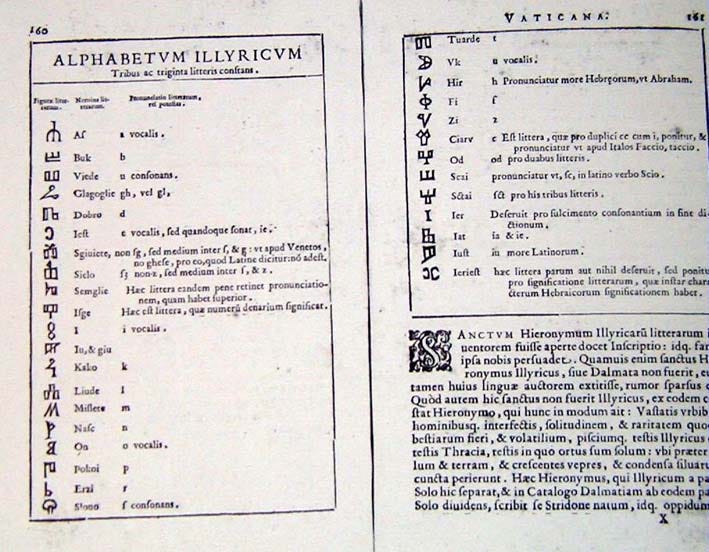
This conflict revealed a deep paradox: on the one hand, the Pope formally accepted the Slavic liturgy, recognizing the right of peoples to have their own spiritual language. On the other hand, political and ecclesiastical interests ensured that such decisions remained largely symbolic. After Methodius’ death in 885, the influence of the German clergy overtook the region completely. Methodius’ disciples—defenders of the Slavic language—were expelled or imprisoned, and their work was destroyed or effectively halted.
The rejection of the Slavic liturgy in the West was a decision of great political, but also symbolic and spiritual significance. It was a choice that would define the spiritual identity of nations like the Czechs, Poles, and Slovaks for centuries to come. Replacing the Slavic language with Latin meant embracing a completely different civilizational model—one that opened the door to Western European culture, but at the same time cut the Slavs off from their own spiritual roots and their native way of expressing the sacred.
The choice of Latin meant the loss of that extraordinary spiritual space created by Glagolitic and Old Church Slavonic. It was a civilizational, political, and above all, symbolic decision—an acceptance that spiritual expression must pass through the filter of a foreign language, foreign symbolism, and foreign culture. As a result, while the Western Slavs retained Christianity, they lost the ability to express it in a form that echoed their own spirituality.
Symbolically speaking, the moment Glagolitic was abandoned in the West marked a spiritual crossroads—a point at which there was a choice between expressing faith in one’s own language and symbols, or entering the stream of dominant civilizational norms. The Western Slavs chose the latter—partly due to political and ecclesiastical pressure, but also in the name of pragmatism. Latin provided access to Western structures of power and culture, carried prestige, and simultaneously created distance from the everyday language and local spirituality of the people.

But this was not a loss in the final sense. Rather, it was a choice that pushed one possible form of spiritual expression into the background for centuries. Today, as more people begin to ask questions about the sources of identity and the spiritual heritage of their own cultures, there is a renewed interest in these overlooked paths. Glagolitic becomes not so much a relic as a symbol of memory—a reminder of an alternative that once existed, and perhaps still exists in another form.
The paradox of history is that what failed to take root in the West found shelter and flourished in the South—in Bulgaria, Macedonia, and Croatia. There, where political pressures had not yet extinguished the spiritual voice, the legacy of Cyril and Methodius evolved into a living cultural and liturgical system. One could say, then, that this voice did not fall silent—it merely changed direction. It survived as an underground current, a spiritual possibility that—after centuries—begins once again to resonate in those willing to listen.
This fragment comes from my work-in-progress book. As I move forward with the project, I plan to share various pieces of it to give readers a glimpse into the world I’m creating. If you enjoy this material, you can access the current version of the book through a paid subscription. And if you feel drawn to the project and would like to help shape its future, I’d be delighted to collaborate with you. :)