

Since attention selects only a fragment of the world, the next question almost asks itself: what happens to that fragment next? Because merely noticing something does not yet mean that it has simply been recorded as it was. Something has passed through the gate of attention, something has been illuminated, something has stopped being background — but this still does not mean that a faithful copy of the external world appears inside. It is very easy to imagine perception in exactly this way: as an inner record of reality. There is the eye, the ear, the skin, the nervous system, and then somewhere in the head an image of what exists outside is formed. As if a person carried a camera and a microphone inside them, and experience were a recording.
But a human being does not experience a recording of the world. A human being experiences a world assembled by their own system.
This is not about saying that everything is invented. That would be too quick, and ultimately not very honest. The world really exists, the body really comes into contact with it, stimuli really reach us, words can really wound, light really falls onto the retina, and another person’s presence can really change our tension, our breathing, and the way we move. The point lies elsewhere: between stimulus and experience, work is always taking place. The organism does not merely receive data. It orders it, completes it, compares it with previous experience, predicts, and assembles it into something that can be lived as a meaningful situation.
The world does not appear within us as raw material. It appears already as some version of the world.
This can be seen in very simple examples. You look at a table, and usually you do not see patches of light, shadows, lines, edges, breaks in color, and shifts in perspective. You see a table. Something stable, familiar, useful. Something you can sit at, put a cup on, rest your hands against. If someone partly covers one leg of the table, you do not conclude that the table has lost a piece of its existence. Your system fills in the continuity. When, in half-light, you see the face of someone you know, you do not analyze separately every refraction of light on the skin. You recognize a person. When you hear a sentence in noise, you often understand a word you did not physically hear in full, because the context suggests what was most likely there.
All of this happens so quickly that it seems obvious. But obvious does not mean simple. Perception is a construction that usually manages to appear direct. And that, in fact, is its strength. If we had to consciously assemble every image from separate data, we would not be able to live. We would not be able to cross the street, catch a falling object, recognize a face, sense a tone of voice, or notice danger. The system has to create wholes quickly, practically, and accurately enough. It is not about an ideal representation of the world, but about a version of reality with which something can be done.
That is why perception is connected with action from the very beginning. We do not see merely in order to have an image. We see in order to orient ourselves. We hear in order to respond. We feel the body in order to regulate movement, safety, distance, effort, rest, and contact. The brain does not receive the world as a ready-made scene that it then calmly observes. Rather, it is constantly building a working model of the situation: where am I, what is happening, what may happen in a moment, what is stable, what is changing, what is mine, what is foreign, what requires a response.
This word — model — may sound too technical, but it refers to something very ordinary. A model does not have to be a theory in the head. It can be the organism’s practical positioning toward the world. When you walk up stairs, you do not consciously calculate the height of every step. The body builds a prediction of movement. When someone hands you a cup, your hand prepares for its weight before you have truly felt it. When you hear a familiar tone of voice, you may immediately sense tension, tenderness, irony, or impatience. The system does not wait passively for complete data. It is always reaching a little ahead.
In this sense, perception is a meeting between what comes from outside and what the organism already expects. When everything goes according to expectation, we hardly notice this work. The door is where it was supposed to be. The floor supports the body. Words arrange themselves into meaning. The face of a familiar person remains the face of a familiar person. The world seems stable because the system is constantly stabilizing it for us. Only when something does not fit does the construction become visible. When a step is lower than the foot expected. When someone speaks in a tone that does not match the words. When something has been moved in a familiar room. When an image that was supposed to be unambiguous can suddenly be seen in two ways.
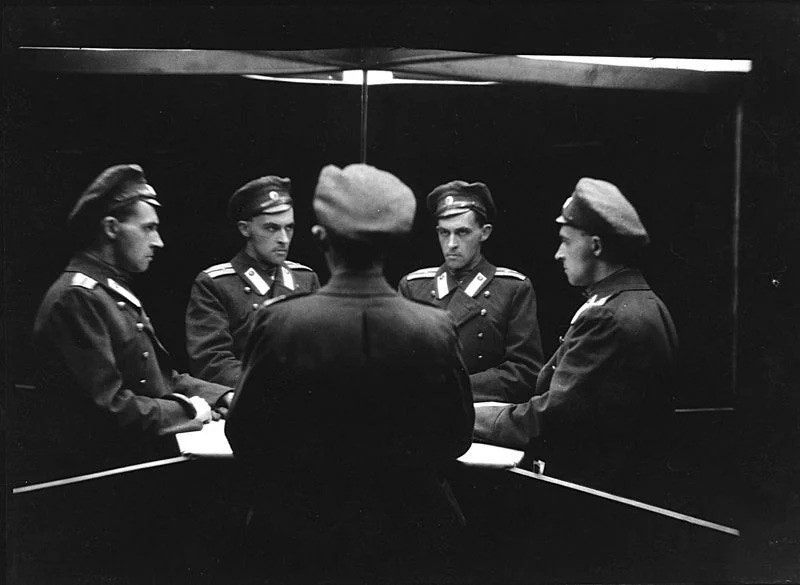
In such moments, it becomes clear that perception is not a simple reflection. It is the active solving of a puzzle. The system asks: what is this most likely to be? What fits this arrangement of stimuli? What do I already know? What does this kind of shape, this kind of sound, this kind of movement, this kind of facial expression usually mean? What could be the cause of what is reaching me? The answer often appears so quickly that we take it for reality itself. We do not say: “my system has assembled an interpretation of this situation.” We simply say: “this is obvious.”
And it is precisely obviousness that can be the most deceptive, because what seems obvious is often simply well matched to our expectations. If you expect criticism, a neutral comment may sound harsh. If you expect rejection, a brief silence may become evidence of distance. If you are in a hurry, someone else’s slowness may look like an obstacle. If you are in defensive mode, another person’s movement may look like an attack. The stimulus really exists: someone said something, fell silent, looked, turned their head, arrived late, wrote a short message. But the meaning of that stimulus does not lie inside it ready-made, like a label. It arises in the encounter between the stimulus and a system that already has its own dispositions.
The same applies to the physical world. Color is not simply a property of things in the way we directly have it in our heads. It is the result of a relationship between light, surface, eye, nervous system, and context. The size of an object, distance, depth, movement — all of this is assembled from signals, comparisons, and predictions. That is why illusions are possible. Not because perception is stupid, but because it uses shortcuts that, most of the time, work very well. An illusion shows not so much the weakness of the system as its method. It shows that the brain does not reproduce the world pixel by pixel, but assembles the best available whole on the basis of incomplete clues.
The word “guesses” may sound dangerous, but in life it is necessary. The organism does not have time for absolute certainty. It has to act on incomplete data. It has to recognize a face before checking every detail. It has to assess a tone of voice before the conversation is over. It has to jump away before it consciously analyzes the movement of a car. It has to take something as stable even though the eyes receive only fragments of the world. Life does not happen in a laboratory of perfect information. It happens under conditions of pressure, lack, change, and the necessity of response.
That is why perception is always somewhat risky. Usually it lands accurately enough, but sometimes it lands too quickly. Sometimes it fills in too much. Sometimes it leans too heavily on past experience. Sometimes it sees the present through a history that was once needed, but now distorts the situation. A person who has learned that a raised voice means danger may hear danger even where there is only intensity. Someone who has been shamed many times may immediately see judgment in another person’s gaze. Someone who had to control their surroundings for a long time may see chaos more quickly than possibility. The system does not lie deliberately. The system tries to predict on the basis of what it has learned.
And here an important boundary begins between perception and story. Perception is not yet a full narrative. It does not yet say: “I am like this,” “they always,” “the world never,” “this definitely means.” But it provides the material from which narrative will soon arise. If a situation is assembled from the very beginning as threat, thought will follow one path. If it is assembled as an invitation, it will follow another. If it is assembled as failure, the body and language will begin preparing a response appropriate to failure. If it is assembled as uncertainty, curiosity may appear. This does not mean that interpretation alone can freely change everything. It only means that the way the world is first assembled matters enormously.
You can see this in relationships. Someone does not reply for several hours. That is a fact. But the experience of that fact can be entirely different. For one person, it is simply a pause. For another, a sign that someone is busy. For a third, the beginning of anxiety. For a fourth, proof that they have once again been disregarded. The stimulus is similar, but the model of the situation is different. The organism does not wait for a full explanation. It assembles the lack of response together with previous experiences, the current state of the body, the need for safety, and a prediction of what may happen. And suddenly you are no longer responding to the fact itself. You are responding to the world your system has built out of that fact.
This is one reason why people so often miss each other in conversation. Each person is convinced that they are reacting to what really happened. But very often, they are reacting to how their system has assembled the event. A single sentence may be heard as care, control, criticism, indifference, or attack. One silence may mean calm, contempt, exhaustion, reflection, or punishment. Of course, real behaviors exist, real violence exists, real tenderness exists, real neglect exists. This is not about invalidating the world. It is about recognizing that access to the world always passes through construction.
This distinction is delicate, but very necessary. Because if we only say, “it is all in your head,” we cause harm. The world really acts upon a person. Words really hurt. Living conditions really overload. Relationships really shape the nervous system. The body really reacts. But if we only say, “you see things exactly as they are,” we also miss the truth. Because a person does not have access to the world directly, without their own body, memory, language, expectations, and fears. We are not locked inside an arbitrary fantasy, but neither are we a transparent mirror. We are a living system trying to assemble the world well enough to survive, act, and preserve continuity.
That is why perception is so closely tied to prediction. We usually think that first we see something, and only then do we predict what will happen. But often, prediction is already part of seeing. When you look at a ball flying toward you, you do not experience only its current position. Your body prepares for its further movement. When you see someone’s face arranging itself toward crying, laughter, or anger, you do not see only facial muscles. You see the possibility of the next moment. When you walk down a dark street and hear footsteps behind you, the sound is immediately woven into a scenario: who could it be, are they close, are they speeding up, should I turn around, should I walk faster.
Perception, then, is not only about what is. It is also about what may be in a moment. That is why it is so difficult to separate seeing from tension, hearing from expectation, touch from meaning. The same touch may be soothing or threatening. The same sound may be irrelevant or alarming. The same facial expression may be neutral or painful. The organism does not ask only: what is this? It also asks: what does this announce? What should I do with it? Does it increase safety or reduce it? Can I stay, or do I need to prepare?
Seen this way, perception becomes something much more human than the simple reception of stimuli. It is the place where the physical world meets the history of the organism. It is the first version of reality with which we begin to live, before we have even managed to name it. Before you say, “I am afraid,” the body may already be seeing danger. Before you say, “this is kind,” the system may already have assembled someone’s presence as safe. Before you say, “I do not trust this,” perception may already have sharpened the details that fit distrust. Before you say, “this is beautiful,” something in you may already have organized the world as a place worth staying in a little longer.
None of this happens outside reality. It happens within it. But it is not its mechanical reflection.
It is worth returning here to the body, because it is easy to think of the construction of perception as something purely mental, as if the brain were sitting in a dark room creating images. Meanwhile, perception is embodied. It depends on whether you are rested, hungry, aroused, ill, tense, calm, safe, overloaded. The body is not merely the carrier of cognitive equipment. It is part of that equipment. A person with a clenched stomach reads a situation differently from someone who can breathe freely. Someone in pain has less room for nuance. Someone chronically tired may live in a world that feels sharper, heavier, and more demanding.
This is not a weakness of character. This is perception through the state of the organism. That is precisely why it is sometimes not enough to tell someone: “look at it differently.” Because they are not looking only with an opinion. They are looking with an entire system. In order to see differently, sometimes one must first recover a little safety, sleep, breath, distance, relationship, regulation. Another interpretation may be impossible as long as the body is convinced that an alarm is underway. A system in threat mode does not want to philosophize. It wants to survive. And that is why its perception will simplify, sharpen, suspect, accelerate. Not because it is bad, but because it operates according to the priority of protection.
But it also works the other way. Safety widens perception. When the organism does not have to defend its boundaries all the time, the world can become richer. More shades become visible. It becomes easier to notice another person’s intention, not only their tone. Easier to distinguish a mistake from an attack. Easier to see possibility where before there was only an obstacle. Easier to allow ambiguity. And ambiguity is one of the luxuries of a regulated nervous system. A person in alarm needs quick categories. A person who is a little safer can afford to ask: what if this is not only one thing?
This is very important for our entire story about the human being. Because if perception is a construction, then our experience of the world is co-created from the beginning by the state of the system. There is no pure world first, then pure reception, and only later psychology. Psychology begins earlier. Already in what is recognized as figure. Already in what is omitted. Already in what seems obvious. Already in what the organism takes as a signal of safety or threat.
This does not mean that we should constantly distrust our senses. Without trust in perception, life is impossible. We have to cross the street, recognize people, respond to words, use things, orient ourselves in space. Perception is one of the greatest achievements of a living system. Most of the time, it works so well that we forget it is working. The problem begins only when we confuse its practical effectiveness with absolute certainty.
So perhaps it is worth learning something in between: to trust perception enough to act, but not so unconditionally that we cannot examine it. This is especially important where relationships, identity, and meaning are at stake. If I see that someone is angry with me, I can treat this as information, but I do not have to immediately take it as a verdict. If I feel that everything is falling apart, I can treat this as a real experience, but I do not have to immediately assume that it covers all of reality. If my system assembles a situation as threat, I can ask: what exactly am I seeing, what am I adding, what am I expecting, what do I know from the past, and what is actually happening now?
This question does not have to be cold analysis. It can be a form of gentleness toward one’s own system. Because the system that constructs the world does not do so on a whim. It does it in order to carry us through something. Sometimes very wisely. Sometimes too quickly. Sometimes according to old maps. Sometimes under the influence of fatigue. Sometimes out of fear. Sometimes out of desire. Sometimes out of hope. Perception is therefore not only cognition, but also a trace of a life’s history. It shows what the organism has learned to expect from the world.
And perhaps this is precisely why changing the way we see is so difficult. It is not enough to receive new information. New information still has to break through the old model. It has to be recognized as important enough, safe enough, and repeatable enough. A person who has long lived in a world of distrust will not immediately begin to see trust simply because someone behaves well once. A person who has long seen themselves as a burden will not immediately begin to see their own worth because someone names it for them. Perception needs experiences, not only arguments. It needs repetition. It needs a body that gradually learns that the new version of the world is not a trap.
Here we can see how closely the second segment connects with the first. We have not left the body behind by moving toward the mind. On the contrary: the deeper we enter cognition, the more clearly we see that the mind does not hover above the body. Attention, perception, memory, language, and thought grow out of a living organism that must maintain itself in the world. Perception is one of its ways of keeping contact with reality — not by copying it, but by continually assembling it into a form that can guide action.
That is why a human being does not simply live in the world as it is “in itself.” A human being lives in the world their system is able to grasp, predict, and organize. In a world stable enough to keep moving through, and flexible enough to respond to change. In a world woven from stimuli, memory, expectations, body, language, and situation.
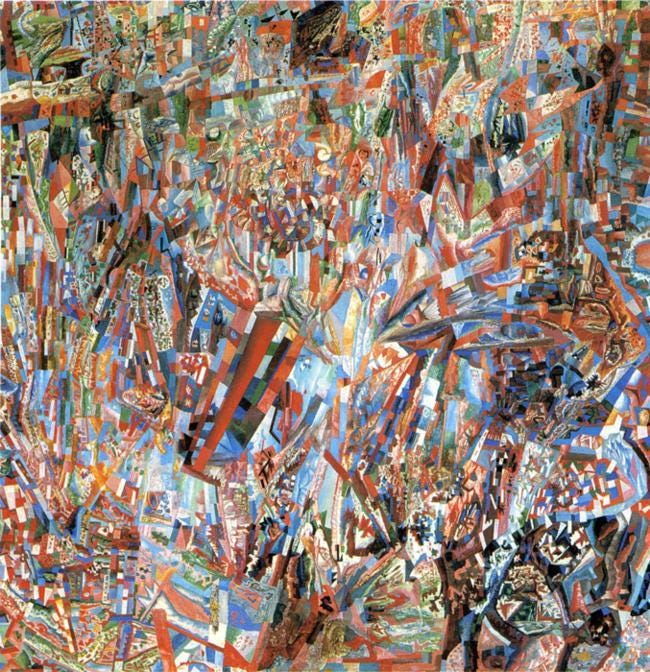
This may sound unsettling, but it is also liberating. Because if perception were a pure recording, there would be nothing to do with it. We could only play back the world as it had been recorded. But if perception is a construction, then it means that sometimes we can see its seams. We can notice where we are filling things in. Where we are predicting. Where an old map is being laid over a new road. Where the body says “danger,” although the situation may call more for curiosity. Where we take something as obvious only because it has been assembled that way many times before.
The point is not to dismantle the whole world. The point is to recover a little space between stimulus and certainty. That space is the beginning of mature cognition. It does not remove automatisms, but it sometimes allows us to see them. It does not grant absolute objectivity, but it allows us to be a little less imprisoned in the first version of an event. It does not make a person cease to have a history, but it gives a chance that history will not always write the present without being questioned.
We might put it this way: perception is not a window through which we passively look at a ready-made world. It is a living construction in which the external world, the body, memory, and prediction meet in order to create something we can experience as reality.
And only from this reality do we begin to remember.
Because if the world does not enter us whole, and what does enter is already assembled in some way, then the next question is: what remains of it? What does the system record as “my experience”? How does a sense of continuity arise out of thousands of moments? Why do we remember some things so strongly, while others dissolve without a trace?
In other words: if perception builds the first version of the world, memory begins to build the first version of ourselves.