

If perception is not a simple recording of reality, then one more step has to be taken. Because even the word “image” can mislead us a little here. It suggests that somewhere inside, a map or model is formed, and only then does a person wonder what to do with it. First they see, then they understand, then they act. This order seems natural, because it fits well with the story we like to tell about ourselves: I am an observer, I gather information, I analyze it, and only then do I make a decision.
But a living organism rarely works this way.
For the organism, the world is not, from the beginning, merely an image. It is a field of possible action. You do not see a chair only as an object of a certain shape, color, and position. You see something one can sit on, something one can move, something one can lean against, something that may get in the way or offer rest. You do not see a door only as a rectangle in a wall. You see a passage, a closure, a possibility of leaving, a boundary, an invitation, or a blockage. You do not see a cup only as an object. You see something to grasp, lift, fill, warm your hands around, or hand to someone else. You do not see a face only as an arrangement of muscles. You see a possible conversation, judgment, closeness, threat, indifference, question, agreement, or refusal.
The world appears before us as “something-to.” Something to grasp. Something to avoid. Something to eat. Something to escape. Something to say. Something to repair. Something to hide. Something to accept. Something to leave. Something to defend. Something to investigate. Something to love. Something to mourn. Perhaps this sounds strange only because we are used to thinking of the world as a collection of things to which we later assign functions. A thing first “is,” and only afterward turns out to be useful, dangerous, beautiful, uncomfortable, or indifferent. But for an organism living in time, need, and risk, function is not an addition. Very often, it is the first way in which a thing is recognized at all.
We do not first calmly ask: what are the objective properties of this physical arrangement? We ask faster, more quietly, with the whole body: what does this make possible for me? What does it do to me? Can I pass through it? Can I stand on it? Will it hold me? Does it threaten me? Does it call to me? Can I ignore it?
This is where the concept of affordance appears.
Put most simply, an affordance is a possibility for action that emerges in the relationship between an organism and its environment. It is not simply a feature of the thing in itself, and it is not merely an invention of the mind. It arises in between. A step has one affordance for an adult, another for a small child, another for someone after an injury, another for a cat, and another for someone carrying a heavy suitcase. The same wall may be an obstacle, a support, a shield, a place to climb, or a boundary that cannot be crossed. The same stone may be something to kick, something to throw, something to sit on, something to trip over, or something completely irrelevant.
The environment, then, is not a neutral stage, and the organism is not a neutral spectator. Together, they form a system.
This fits very well with everything we have been building so far. We said that a human being is a system, not a thing. That the body is a process, not a casing. That the nervous system does not record the world like a camera, but selects signals and prepares responses. That perception is not a recording, but a construction. Now we need to add this: from the beginning, this construction has a practical direction. The world is assembled not only so that it can be “understood,” but so that one can position oneself toward it in some way.
Because life requires positioning.
One has to approach or move away. Grasp or let go. Stay or leave. Answer or remain silent. Sit, walk, eat, flee, embrace, sleep, hide, ask, refuse, wait. Every organism, even a very simple one, must relate to its environment somehow. It is not enough that it “knows” something. It has to act, or at least be ready to act. In this sense, perception without the possibility of action would be incomplete for life. An image of the world with which nothing can be done would be a luxury evolution could rarely afford.
That is why seeing is connected with movement from the very beginning. When you look at a cup, the hand almost knows how it might wrap around it. When you see a narrow passage, the body assesses whether it will fit. When you approach the edge of a platform, your legs, stomach, and balance know something before you put it into words. When someone makes a sudden movement toward you, the body may pull back before you manage to say: I was frightened. The world is full of small invitations and warnings that do not first have to pass through calm reflection.
This does not mean that a human being is only a collection of reflexes. Rather, it means that reflection grows out of a much older layer of orientation. First, the world has to become available as something one can respond to. Only later can it become the object of longer reflection, story, philosophy, or theory. A child does not begin with the definition of a table. First, the child learns that one can hide under it, lean against it, hit oneself on its edge, receive food from it, climb onto it, be scolded for climbing onto it. The meaning of things is born in use, touch, prohibition, pain, pleasure, repetition, and relationship.
In this sense, the world is, from the beginning, a world of possibilities. But not all possibilities are visible to everyone.
This is very important. An affordance depends not only on the object, but also on the organism’s abilities, state, history, and situation. A ladder may offer ascent to someone who has strength and physical ability, but to someone with vertigo it may offer, above all, danger. A crowded room may offer conversation to one person, exposure and judgment to another, and the chance to disappear into the crowd to a third. An empty hour in the calendar may be rest for one person, and fear of idleness for another. A message from someone close may be an invitation, an obligation, a promise of closeness, or the beginning of tension.
This is not arbitrariness. It is relationality.
The world does not magically change simply because someone looks at it. A chair still has structure, height, stability, and weight. But what the chair makes possible depends on the body, goal, situation, and history of the person using it. The same applies in relationships. Someone’s silence is objectively an absence of words, but for a particular person it may open different possible actions: ask, withdraw, attack, wait, apologize, pretend indifference, freeze. Silence, then, is not merely “given.” It is read as a certain arrangement of possible movements.
Sometimes this is what most determines our experience: not what is, but what seems possible.
A person in depression often does not live only in a sad world. They live in a world that has lost its affordances. Things stop calling. The bed is no longer only a place of rest, but a place of being stuck. The phone is not a tool of contact, but a burden. A walk is not a possibility of breathing, but an effort beyond one’s strength. The future is not a space of possible movements, but a wall. From the outside, someone may say: but you can get up, call, go out, try. But from the inside, these possibilities are not simply available. They do not light up as possible. They have no handle.
The same can be seen in anxiety. The world does not so much disappear as change its arrangement of affordances. A door becomes an escape route. Another person’s face becomes a possible judgment. The phone becomes a source of bad news. One’s own body becomes something that has to be monitored. Public space becomes a field of risk. Anxiety organizes the world as a set of things that have to be predicted, checked, avoided, or controlled. Not because a person is “making up” the world, but because their system positions the environment in terms of safety.
A sense of safety, by contrast, expands the world. When the organism does not have to look for danger all the time, more possible actions appear. One can ask instead of immediately defending oneself. One can try instead of instantly withdrawing. One can rest without guilt. One can make a mistake and not fall apart. One can talk with someone without treating every tone as a test. One can see in a room not only obstacles, but also places, directions, tools, chances. Safety, then, is not only a pleasant state. It is a condition for a richer perception of possibility.
This is both very practical and very deep, because if the world is for us a field of action, suffering can sometimes be understood as a narrowing of that field. I do not see a way out. I do not see meaning. I do not see what I can do. I do not see where I can lean. I do not see whom I can trust. I do not see how to begin. This does not always mean that no possibility exists. Sometimes it means that the system is not able to grasp it as available. There is an enormous difference between “a possibility exists objectively” and “a possibility is lived as possible.”
A person does not act according to a map of objective options. A person acts according to the world that appears to them as possible.
That is why good support often does not consist in giving advice such as: do this. To someone on the outside, a given path may seem obvious. To the system on the inside, it may be invisible, too costly, or threatening. Sometimes one must first reduce tension, offer companionship, divide the movement into a smaller step, create conditions in which something begins to look not like a wall, but like a passage. Only then does a real affordance appear: something that can actually be done, not only theoretically.
This also applies to learning and development. When you learn to play an instrument, at first you see keys, strings, fingers, instructions, mistakes. Over time, the instrument begins to offer different things. This arrangement of sounds becomes a path. This movement of the hand becomes a possibility. What was previously chaos begins to become a field of action. It is similar with driving a car. A beginner driver sees too many separate elements: mirror, clutch, lane, sign, pedestrian, lights. An experienced driver sees the traffic situation as an arrangement of possible movements: I can enter, I need to slow down, that person may turn, space has to be left here.
Skill changes the world. Not metaphorically, but practically. What you cannot do often does not exist for you as a possibility. Someone who cannot swim sees water differently from a swimmer. Someone who does not know the language sees a city differently from someone who can ask, read, answer, joke. Someone who has learned to talk about emotions sees conflict differently from someone who knows only attack or withdrawal. Competence, then, is not only something “inside a person.” It transforms the landscape of the possible world.
It is worth pausing here, because affordances show something important about the relationship between human beings and the world. We are immersed in the environment not only as knowing beings, but as beings capable or incapable of certain movements. My body, my experience, my fear, my skills, my social class, my health, my relationships, my tools — all of this influences what possibilities the world opens before me. The same space is not the same world for everyone.
Stairs are different for a wheelchair user. An office is different for someone who knows formal language and for someone who fears it. School is different for a child who feels safe and for a child who has learned to expect humiliation. The internet is different for someone with access to knowledge and support, and different for someone pulled in by algorithms of fear, comparison, and anger. The city is different for a strong, young, healthy body, and different for a body that is tired, ill, old, or threatened.
This is not about saying that everyone lives in a completely separate reality. It is about recognizing that reality is always lived through an arrangement of possibilities. And here a very important social dimension begins, although we do not yet have to enter it deeply. It is enough to notice that society also designs affordances. A bench may invite rest or deliberately prevent sleeping. A form may allow someone to ask for help, or complicate the process so much that help becomes inaccessible. A workspace may offer focus or constant distraction. A relationship may offer honesty or only caution. A family may offer return, or only tension. Language may offer a way to name oneself, or force silence.
In this sense, possibilities for action are not only a matter of individual psychology. They are also built into the environment. This matters, because otherwise it becomes very easy to moralize. Someone does not do something, so we say: they do not want to. They are not trying. They have no discipline. They are not taking the opportunity. But sometimes it would be more accurate to ask: is this possibility really available to them? Do they have the body, resources, safety, knowledge, support, history, and conditions to see it as a possibility? Does the world really give them a handle, or does it only look from a distance as if it does?
Affordances teach humility toward simple advice. Because “you can” does not always mean the same thing. You can theoretically. You can legally. You can physically. You can emotionally. You can socially. You can without losing safety. You can without paying a price no one outside can see. You can today, but not yesterday. You can with someone, but not alone. You can after rest, but not in overload. You can if someone shows the first step. You can if the world stops being only a wall.
This is not an excuse for passivity. It is a more accurate description of action. A person acts where their system finds a possible movement. Sometimes that movement is very small: writing one sentence, getting out of bed, saying “I don’t know,” asking, going out for five minutes, not responding with aggression, noticing one’s breath, admitting fatigue. From the outside, it may look banal. From the inside, it may be an enormous change in the landscape, because where previously there had been no passage at all, a crack has appeared.
It is also worth seeing that affordances do not concern only physical things. Words have affordances. One sentence can open a conversation; another can close it. “Tell me more” offers a different world than “don’t exaggerate.” “You are allowed to make a mistake” offers a different world than “you did it again.” “I am here” offers a different world than “deal with it.” In relationships, we often respond not only to the content of a statement, but to what movements become possible after it. Can I tell the truth? Do I have to defend myself? Can I cry? Do I have to pretend? Can I stay? Should I disappear?
The same applies to gaze, tone, silence, the rhythm of the body. Communication is full of affordances. Sometimes someone gives the possibility of closeness with a single gesture. Sometimes someone removes the possibility of honesty with a single tone. Sometimes silence is space, and sometimes it is punishment. Sometimes a question is an invitation, and sometimes it is an interrogation. A person very often knows this before they can name it. The body senses whether, in a given arrangement, one can relax or has to be careful. Whether the relationship offers safety, or only an exchange of arguments.
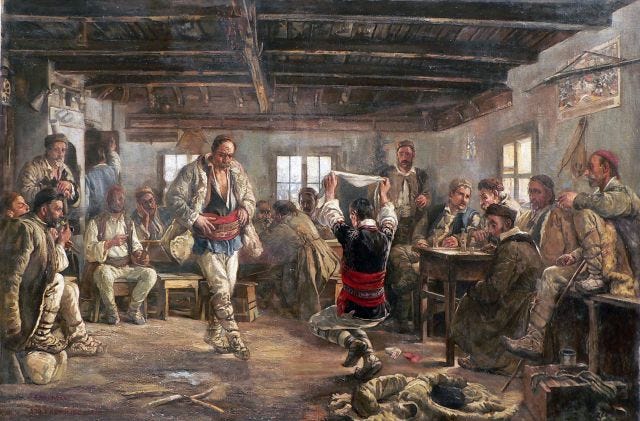
Here we can see how affordances prepare the later texts on emotions and relationships. Emotions will speak about value and safety. Relationships will speak about co-regulation and mutual influence. But already here we see the first version of this problem: the world is not only in front of us. The world offers us something or refuses us something. Some arrangements give life more movement. Others narrow it. Some places, people, and languages expand the field of the possible. Others reduce it to defense.
And now we can return to perception.
If perception is a construction, then it is not only about the construction of an image. It is about the construction of a field of action. The organism does not build the world in order to have an accurate photograph. It builds a world in which something can be done: survive, find food, avoid harm, maintain a bond, rest, learn, predict, choose. That is why perception, action, and meaning are intertwined from the beginning. To see something is often already to be positioned toward it. Not always consciously. Not always accurately. But really.
We might therefore say that a person does not first look at the world and only then decide whether to do something with it. Very often, a person sees the world already through the prism of possible movements. What is graspable, near, threatening, available, forbidden, promising, too difficult, too costly, or worth the effort appears in experience as such before a full sentence has even formed.
That is why changing life sometimes requires changing affordances, not only beliefs. If you want a person to rest, rest has to become genuinely available, not merely morally recommended. If you want a child to learn, the world has to offer curiosity, safety, and the possibility of trying, not only evaluation. If you want someone to tell the truth, the relationship has to offer room for truth. If you want someone to come out of isolation, contact has to become something more than a risk of humiliation. If you want the system to make a new movement, that movement has to find some support in the world.
Sometimes that support is an object. Sometimes a rhythm. Sometimes a person. Sometimes a sentence. Sometimes a space. Sometimes repetition. Sometimes one small proof that another way is also possible. Development, then, does not only mean that a person “inside” understands something. It also means that their world begins to offer new possibilities, and that their system begins to be able to notice and use them. Sometimes the body changes first. Sometimes the environment. Sometimes the relationship. Sometimes language. Sometimes skill. Sometimes everything at once, very slowly.
And when a new possibility is noticed and enacted, something in the system may change. Because action is not only the result of cognition. Action teaches cognition. Once you pass through something that previously looked like a wall, the world is no longer exactly the same. When you tell the truth and the relationship does not fall apart, honesty may become a little more possible. When you rest and nothing terrible happens, rest may stop being only guilt. When you make a mistake and are accepted, a mistake may slowly lose the status of catastrophe. When you ask for help and someone responds, the social world begins to offer a different movement.
And this is where learning begins.
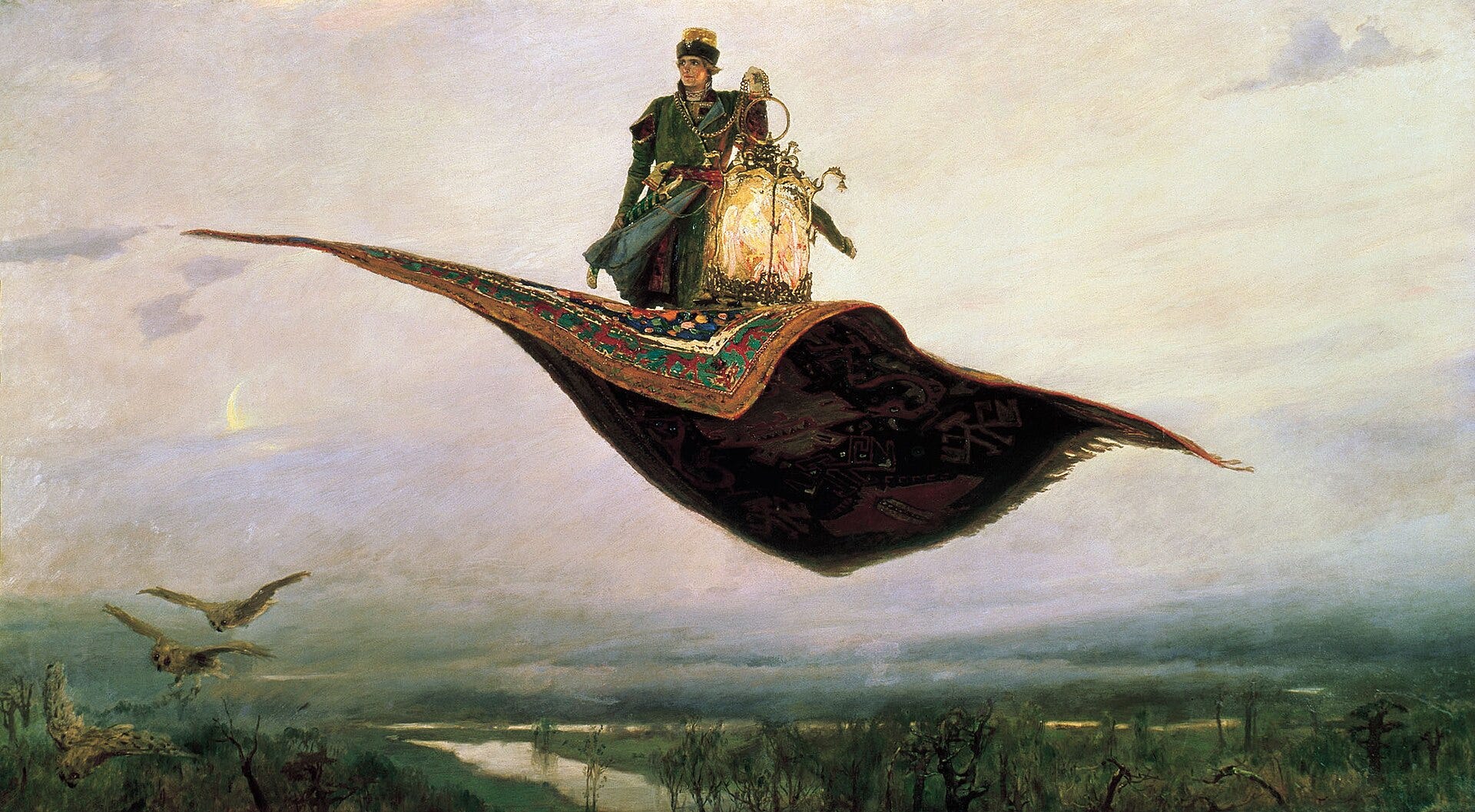
Not as a school activity. Not as the memorization of information. But as a restructuring of what the organism recognizes as possible, safe, threatening, reachable, worth trying. Experience does not merely add itself to history. It calibrates the system. It changes the map of handles. It shows what can be touched, where one can stand, whom one can trust, how far one can go, what must be avoided, what can be survived.
This text, then, completes the step after perception. The world is not only constructed as an image. It is constructed as a field of possible action. Only now will the question of memory become fuller, because before we ask what remains after experience, we have to understand that experience is not only what we saw. It is also what we did, what we could not do, what we tried, what we avoided, what turned out to be possible, and what remained closed.
We might put it this way: a human being lives not only in a world of things and not only in a world of meanings. A human being lives in a world of possibilities. And their system is constantly asking: what can be done here, what must be done, what must not be done, what is not yet possible but may one day become so?
And that is why the next step must be learning.
Because if the world appears as a field of possible action, then the whole of life becomes a process of learning that field: its boundaries, passages, dangers, supports, shortcuts, false promises, and new roads.