

The world does not begin to become possible only when someone tells us that it is. Before a sentence, a rule, an instruction, or a conscious decision appears, the organism has already spent a long time gathering experiences and arranging them into something like a practical map. Not a map in the sense of a drawing, not a theory in the head, but an arrangement of predictions: here one can approach, there it is better to be careful, this tone means tension, this face may receive me, this gesture announces rejection, this effort makes sense, this is not worth trying, this hurts, this helps, this returns, this disappears. If earlier we said that the world appears as a field of possible action, then now we need to ask where the system even gets its knowledge of which movements are possible.
The answer is simple, but enormous: the system learns.
Not only at school. Not only when someone explains rules to us, corrects an exercise, checks an assignment, or passes on knowledge. The organism learns all the time. It learns through touch, pain, relief, repetition, consequence, lack of consequence, presence, abandonment, rhythm, shame, safety, failure, success, a gaze, a tone, hunger, sleep, overload, and rest. It learns through what happened, but also through what did not happen, though it could have. Through help that came. Through help that did not come. Through danger that passed. Through danger that returned. Through thousands of tiny corrections, many of which will never be named as “learning,” and yet it is precisely they that gradually shape the way a person lives in the world.
Learning, then, is not an addition to life. It is one of the ways life attunes itself to the world.
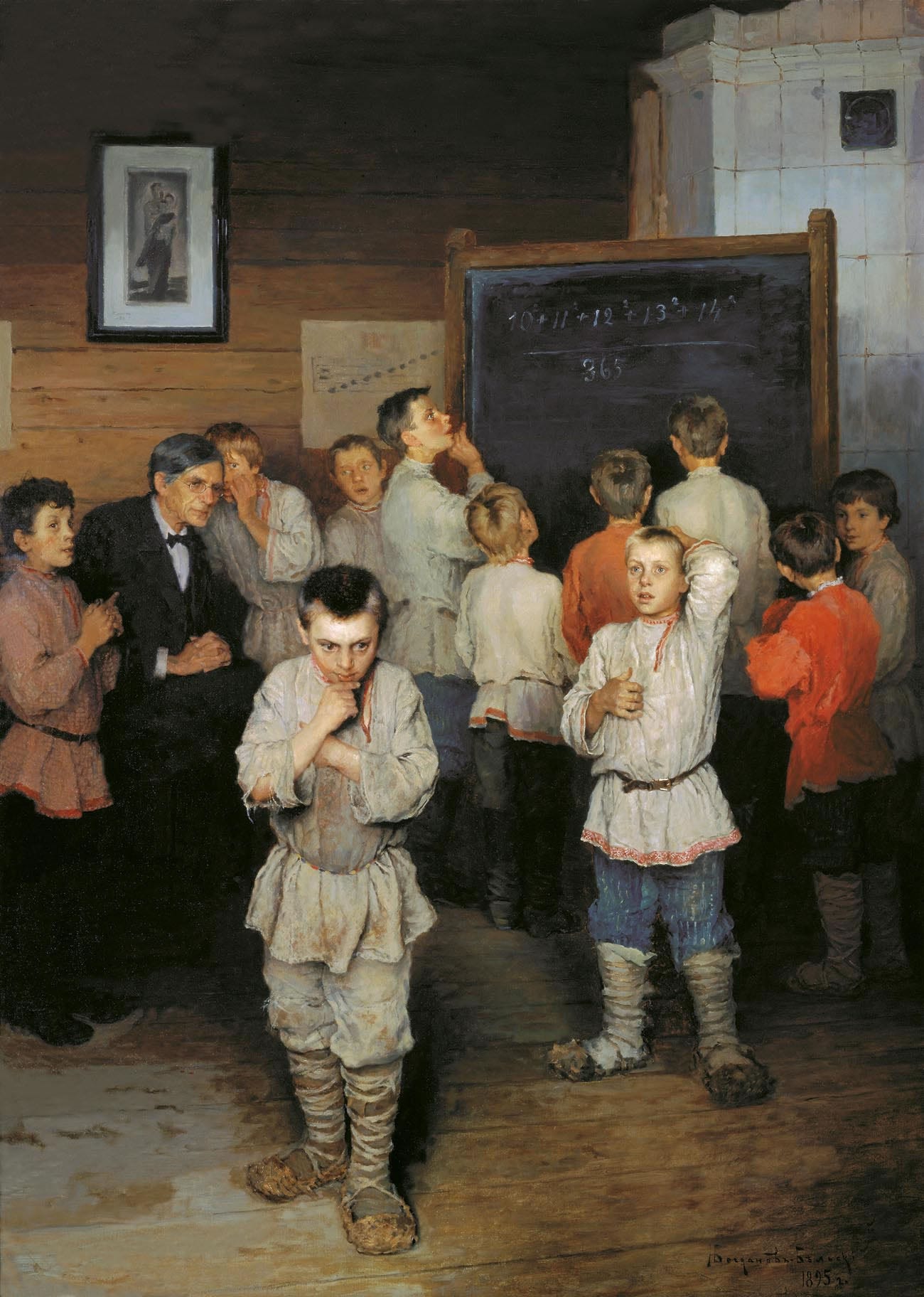
This matters, because we very often think about learning too narrowly. We associate it with information, memory, evaluation, intelligence, school, a textbook. Someone does not know something, so they have to learn it. Someone cannot do something, so they have to practice. Someone has forgotten, so they have to repeat. But at a deeper level, learning is something much more basic. It is a change in the system under the influence of experience. It means that after passing through something, the organism is no longer exactly the same as it was before. Sometimes this change is small, almost invisible. Sometimes it lasts a moment. Sometimes a whole lifetime. But it happens constantly.
When you touch hot metal, the body learns faster than words. When someone responds with tenderness to your helplessness, the system may remember that exposing yourself does not always end in humiliation. When you are laughed at once again for making a mistake, the system may learn that trying is dangerous. When you practice a movement thousands of times, it begins to pass through the body with less and less effort. When you live in tension for years, tension may become the default setting of the world. When you experience predictable care for a long time, trust may become easier than suspicion.
This is what plasticity means. Not that a person is endlessly malleable. Not that they can be shaped into anything if only they try hard enough. Plasticity is not a magical promise of infinite change. It is rather the capacity of a living system to reorganize itself under the influence of what happens to it and what repeats. The organism is not a stone, but neither is it shapeless water. It is something in between: a structure that can change, but changes under certain conditions, at a certain cost, and within certain limits.
This is very important, because the language of “change” can be cruel. We often say: just learn differently, stop reacting like that, change the habit, trust, let go, don’t be afraid. As if the system could be reset by a single conscious command. But if a reaction was formed through thousands of repetitions, through years of experience, or through situations of great emotional force, it will not disappear simply because someone decides it is irrational. The system does not learn only through arguments. It learns through experience.
And that is why unlearning also requires experience.
A person who has learned that closeness ends in pain may intellectually know that not every relationship is like that. But their body may still respond with distance, control, or escape. Someone who has learned that a mistake means shame may understand that mistakes are part of learning, and still freeze at every evaluation. Someone who has learned that they must earn other people’s presence may hear the words “you don’t have to prove anything,” but not yet have a place inside that knows how to believe them. New information is not enough. It still has to become a new experience.
Learning is therefore an embodied process. It does not take place only in the head. It changes breath, muscle tension, readiness for movement, the threshold of alarm, the way one looks, the range of attention, the availability of words, the imagination of the future. When you learn to ride a bicycle, you do not merely store instructions. The whole system of balance, vision, movement, and prediction begins to work differently. When you learn to talk without attacking, it is not only a sentence in the head that changes. What changes is the tolerance of tension, the rhythm of response, the ability to pause, the sense that conflict does not have to mean catastrophe right away. When you learn to rest, the body has to gradually discover that inactivity is not a threat.
That is why many of the most important things in life are not simply “understood.” They are practiced by the system.
Trust is practiced. Boundaries are practiced. Rest is practiced. Closeness is practiced. Courage is practiced. Honesty is practiced. The ability to endure uncertainty is practiced. Not in the sense of artificial character training, but in the sense of repeated experiences that show the organism: this can be survived, this is possible, this does not always end the way it used to.
A single revelation is rarely enough. It may be important, it may open a door, it may name something that had remained nameless for years. But the system usually needs repetitions. It needs time. It needs to test the new possibility in different situations. It needs to see that it was not an exception. If someone responds well to your honesty once, that may move something deeply. But if honesty was punished for years, the system may still wait for proof that this time things are truly different. Not because it is stubborn. Because its task is to protect continuity and safety.
In this sense, old reactions are often former forms of learning. What looks like a problem today may once have been a solution. Avoidance may have protected against overload. Control may have provided a minimum of predictability. Freezing may have been the only way to survive a situation with no way out. Perfectionism may have reduced the risk of humiliation. Pleasing others may have protected against rejection. Distrust may have been wisdom in an environment where trust was dangerous. The system learned what made sense under those conditions.
The problem begins when old learning governs a new world.
When the organism reacts to today’s conversation as if it were still in the old family. When it responds to a calm remark as if humiliation were about to come. When it treats closeness as a trap because closeness was once unpredictable. When it reads rest as guilt because value once depended on usefulness. When silence sounds like abandonment because once it really was. The system is not stupid. It is simply using a map it once had to build.
Learning creates maps. Plasticity allows them to change. But no map disappears simply because a new road appears.
The new road has to be walked. This sentence is very important. We can speak about changing beliefs, therapy, education, development, spirituality, relationships, but very often the core is similar: the system needs to pass through a new experience enough times for it to begin competing with the old prediction. It is not enough to say: I am safe. Sometimes one has to experience hundreds of times that the body can relax and nothing bad happens. It is not enough to say: I can ask. Sometimes one has to ask many times and live through the response. It is not enough to say: a mistake will not destroy me. One has to make a mistake and see that life continues.
Action is one of the most important ways of learning. Not because action is always easy or possible, but because only in action does the system receive a kind of proof that thinking cannot fully replace. You can imagine a conversation for a long time, but the conversation truly changes the arrangement only when it happens. You can know that a walk helps, but the body learns this differently when it comes back from fifteen minutes of air. You can understand that a boundary is necessary, but the system learns it only when you say “no” and live through the consequences. You can read about trust, but trust grows through encounters.
This connects this text with the previous one. If the world is a field of possible action, then learning is the process through which the system discovers which actions are possible, what effects they have, and whether they are worth repeating. Every experience calibrates the field a little. Something becomes easier. Something becomes harder. Something begins to shine as available. Something goes dim. Something is marked as dangerous. Something as safe. Something as “for me.” Something as “not for me.”
But learning is not only the strengthening of simple associations. A human being is not a machine that receives reward or punishment and automatically updates a table of behaviors. Of course, consequences matter. Relief reinforces. Pain teaches. Repetition creates pathways. But human learning is also connected with meaning, relationship, story, with whether we understand what happened. With whether someone was there. With whether we had agency. With whether the experience was integrated into the whole of life, or remained a foreign fragment that returns like an alarm.
That is why two similar events can teach entirely different things. Failure in a safe environment may teach humility, patience, and correction. Failure in an environment full of humiliation may teach hiding. Criticism from someone kind may help develop a skill. Criticism from someone contemptuous may teach fear of visibility. Chosen solitude may teach rest. Imposed solitude may teach that no one will come. Pain in the context of care may be difficult, but possible to pass through. Pain without meaning and without support may become a wound that organizes the future.
The system learns not only events. It learns the context of events.
This is crucial. Not only “what happened?” but: with whom, where, could I do anything, did anyone respond, was I helpless, did it repeat, was I given language, could my body calm down, did someone recognize my experience as real? All of this determines what trace remains. The same word can teach closeness or shame. The same touch can teach safety or threat. The same change can teach flexibility or chaos.
Learning is always situated. That is why the environment matters so deeply. We do not learn in a vacuum. We learn in families, schools, cities, languages, social classes, cultures, technologies, rhythms of work, systems of reward and punishment. We learn what it is worth noticing. What is better left unsaid. How quickly one must respond. Whether rest is allowed. Whether a mistake is information or disgrace. Whether the body is something to be listened to, or something to be forced. Whether emotion is a signal or an obstacle. Whether another person is a resource or a threat.
In this sense, a human being is a history of learning. Not only a history of events, but a history of system updates. A history of what became easy, difficult, automatic, impossible, desired, repulsive, safe, forbidden, obvious. Sometimes the question “why am I like this?” can be translated into something more precise: what has my system learned about the world? What predictions have been written into me? What possibilities have gone dim? What reactions were rewarded? Which were punished? What did I have to repeat for so long that it began to look like character?
This last point is especially important, because many things we call personality may partly be histories of learning so deeply embedded that they look like nature. Someone says: I am just closed off, but perhaps for years they learned that openness costs too much. Someone says: I am lazy, but perhaps their system learned helplessness after many attempts without influence. Someone says: I am controlling, but perhaps control was the only way to feel a piece of ground in a chaotic world. Someone says: I don’t know how to be close, but perhaps closeness was never safe enough to become a skill.
This is not about explaining everything through the past and taking responsibility away from the person. It is about seeing that responsibility does not begin with contempt toward one’s own reactions. It begins with understanding what the system has learned and what it may need in order to learn differently. If an old reaction was once a form of adaptation, it is not enough to condemn it. Conditions must be created in which it stops being the only available road. Then change is not a war against oneself. It is an expansion of the repertoire.
This fits very well with the notion of plasticity. Plasticity does not say: you can be anyone, immediately. Rather, it says: the system can reorganize itself through new experiences, repetitions, corrections, and relationships. It can strengthen certain pathways, weaken others, create new connections, learn new predictions. But it needs material. It needs conditions. It needs time. It needs energy. It needs sleep, body, safety, attention, practice. It does not change in a vacuum.
And here the body returns. Because plasticity is biological. Every learning process has its bodily cost. The brain and nervous system are not a mist of meanings, but living tissue. Change requires metabolism, rest, regulation, repetition. That is why an overloaded person learns differently from a safe person. Stress can sometimes sharpen attention and accelerate the memory of threat, but chronic overload narrows the field of learning. When the organism is fighting for survival, curiosity, experimentation, and flexibility become harder. A system in alarm learns, above all, alarm.
This sentence is also important: a system in alarm learns alarm.
If you live for a long time in an environment that demands constant readiness, your organism does not only “have stress.” It is training. It trains vigilance. It trains scanning. It trains the quick reading of tone, face, and tension. It trains postponing needs. It trains difficulty falling asleep. It trains living without a full breath. Later, when conditions change, the body may still operate according to the old training. Not because it wants to suffer. Because it has truly learned.
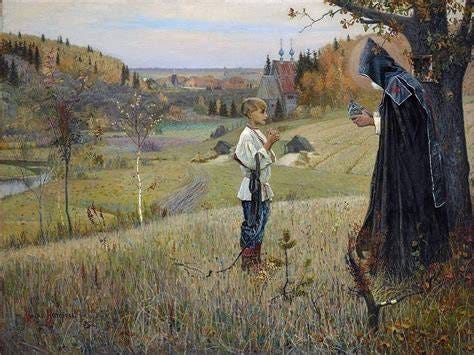
But another kind of learning is also possible. A system in safety learns safety. In a repeated relationship, it learns predictability. In contact without shaming, it learns to speak. In a space where mistakes are allowed, it learns to try. In a rhythm of rest, it learns that it does not have to fight constantly. In good effort, it learns agency. In a boundary that does not destroy the relationship, it learns that “no” does not have to mean the end of the bond. In a conflict that gets repaired, it learns that tension does not have to mean catastrophe.
These are very concrete lessons. Not spectacular, not always visible from the outside. Sometimes as small as one calmer sentence, one breath before answering, one step outside the house, one conversation without escape, one “no” without collapse, one request without shame. But it is precisely from such small repetitions that the system builds new predictions. Great changes very often begin with small corrections repeated enough times for the body to begin believing them.
Here something very important appears: learning requires error. Not in the sense of moral failure, but in the sense of a difference between prediction and what actually happened. The system updates when the world does not entirely confirm the old map. I expected rejection, and someone stayed. I expected catastrophe, and there was difficulty, but it could be survived. I expected shame, and I received correction without humiliation. I expected that I would not manage, and I took one small step. Such moments matter because they show the system: the old map does not describe everything.
But for error to teach, it has to be survivable. If the difference between expectation and reality is too violent, the system may close down. If someone has feared closeness their whole life, throwing them immediately into a very intense relationship does not have to teach safety. It may only confirm alarm. If someone fears mistakes, public shaming will not teach courage. It will teach avoidance. If someone is overloaded, too great a change may not widen the world, but narrow it even further. Good learning often requires gradation. A movement new enough to change something, but not so large that the system has to defend itself.
This is visible in every practice. In rehabilitation, education, therapy, training, relationships, parenting, art. Too little challenge — the system does not have to change. Too much challenge — the system enters defense. Between these extremes there is a space in which development is possible. Not always comfortable, often a little difficult. But still bearable. It is there that the organism can say: I do not know this, but perhaps I can try. It is there that learning appears as a living process, not as violence against the system.
That is why patience is not a luxury of development. It is its condition.
Not everything can be accelerated without cost. You can force a person into a behavior. It is harder to force a system to integrate an experience. You can push someone into a situation, but you cannot order their nervous system to recognize it as safe. You can speak a true sentence, but you cannot make it become body immediately. Learning has its own rhythm, because the organism must not only hear what is new, but also find a place for it.

Here we begin to understand why memory is the next necessary topic. If experience reorganizes the system, then something from experience must remain. Not only as a story. As a trace. As a facilitation or an obstacle. As readiness. As prediction. As a changed threshold of reaction. As a new possibility. As an old caution. Learning without memory would make no sense. Every situation would be the first. Every danger would have to be discovered anew. Every closeness would have no history. Every skill would fall apart after being performed.
Memory, then, is not only a storehouse of what was. It is the condition for learning to have continuity at all.
But before we move on to memory, one more thing has to be completed: learning is not always good. The fact that the system learns does not mean that it learns truth in its pure form. It learns what was adaptive, repeatable, strong, emotionally significant, or necessary in a given environment. One can learn trust. One can learn fear. One can learn language. One can learn silence. One can learn agency. One can learn helplessness. One can learn rest. One can learn to ignore the body. One can learn to love, and one can learn to protect oneself from love.
This is both dramatic and beautiful. Dramatic, because it shows that a person can be shaped by conditions they did not choose. Beautiful, because it shows that the system is not dead. It can receive new experiences. It can update the map. It can recover movement that was once unavailable. It can learn the world differently, although often more slowly than we would like. A person is not condemned to the first version of their reactions, but neither are they obliged to change immediately just because someone already understands the problem.
We might put it this way: learning is the process through which experience leaves a trace in the system and changes its future possibilities. Plasticity is this system’s capacity for reorganization: sometimes through repetition, sometimes through prediction error, sometimes through relationship, sometimes through practice, sometimes through safety, sometimes through necessity. Thanks to it, a human being is not only what happened to them, but also what their organism learned from what happened to them.
And now we can ask the question that leads us further.
What exactly remains after experience?
If the world appears as a field of possible action, and the organism learns through what it tries, what it avoids, and what happens to it, then there must be some way of binding these traces together. Something must maintain continuity between past pain and today’s caution, between past relief and today’s longing, between a thousand repetitions and a skill that today seems natural.
That way is memory. Not as a dead archive, but as a living trace of learning. Not only as a recollection that can be told, but as a changed system that sees differently, reacts differently, and predicts differently. That is why the next text must move toward memory — toward how continuity arises out of experiences, and how, from that continuity, a sense of being the same person begins to emerge.