

So we need to start somewhere. Every beginning is a bit problematic, because no matter where you choose to begin, you can always ask: “What came before that?”
So instead of chasing metaphysical first causes, let’s follow an old, reliable rule from psychology: start with yourself - with what is closest and most available.
It seems obvious enough that we are a being called a human. But if we ask the question seriously - what does that actually mean? What is a human made of, in the most basic, literal sense, the one we can observe with our own eyes?
The first answer is surprisingly simple. We are made of matter. The same matter that everything around us is made of. The same elements forged long ago in ancient stars, scattered across the universe, and later gathered by the planet we now live on. We were shaped by the physical conditions of Earth and by the chemical reactions that, at some point in history, allowed matter to begin organizing itself into more and more complex forms.
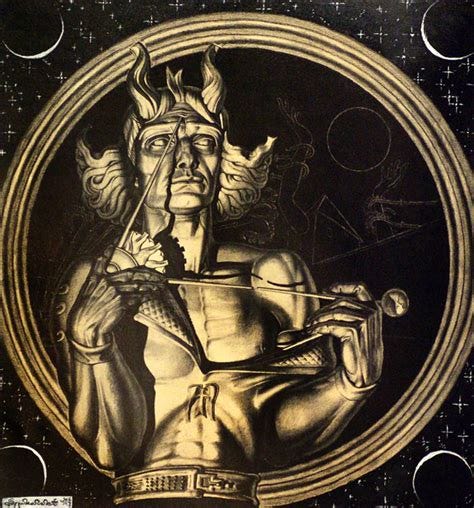
We are built from oxygen, carbon, hydrogen, nitrogen, and a handful of other elements - nothing exotic on its own. Yet from these ingredients emerged organic molecules, then cells, and from cells: tissues. Muscles, bones, skin, organs, entire systems. Everything we see when we look at the body as a physical construction.
But is that all? Is a human just a bag of organic tissues you can place on a table and say, “there it is”? Of course not. Because the body isn’t something that simply lies there. Something is always happening inside us.
Countless processes are constantly unfolding: metabolism, cellular respiration, energy exchange, reactions to external stimuli. Every second our organism is regulating, adjusting, evaluating, keeping track - all to maintain something biology calls homeostasis, the inner balance required for life.
This is done by systems that work together like an integrated whole: the nervous system, the endocrine system, circulation, digestion, immunity, and so on. Each has its own function, but none of them operates in isolation.
The result is something more than just a collection of parts - a self-sustaining system, a living organism capable of responding to the world, processing information, and maintaining its own existence amidst constant change.
And this is only the beginning of what it means to be human.