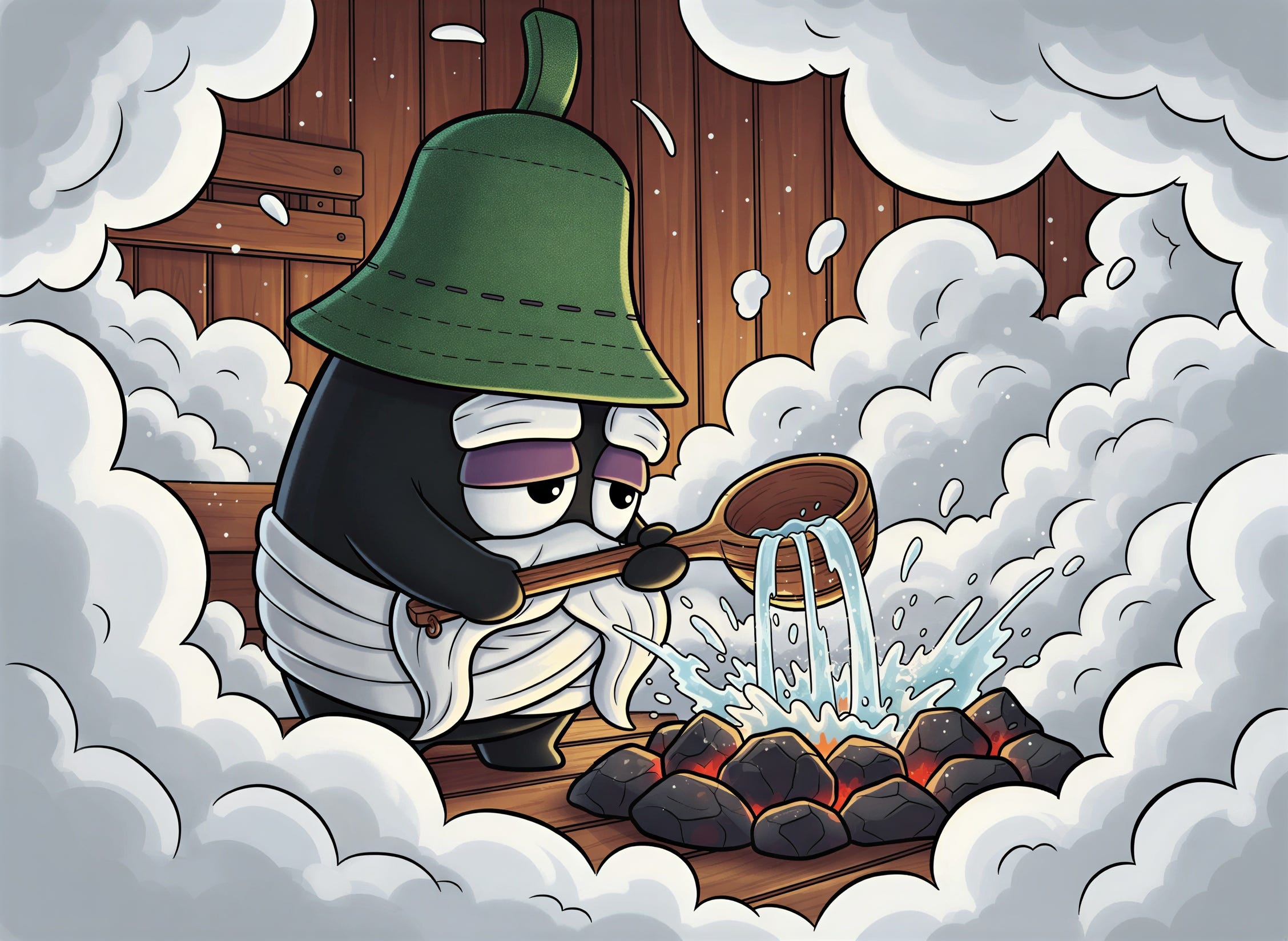
After spending some time on Domovik, I wanted to move a little further away from the center of the house and focus on another figure important to this world: Bannik.
Unlike a household spirit tied to the hearth or the everyday rhythm of the home, Bannik belongs to the banya— to a place that is still close to domestic life, but already carries a very different mood. In traditional Rus culture, the bathhouse was not only a place for washing. It was also connected with healing, divination, and other moments of transition, which made it both useful and unsettling at the same time.
That is exactly what interested me about him.
Bannik is not simply another domestic creature. He belongs to a room shaped by steam, heat, silence, privacy, and a certain kind of tension. Folk belief treated the bathhouse as a place with its own rules, and the spirit tied to it had to be respected accordingly. Traditions recorded around the bathhouse include gestures of caution, offerings, and ritual behavior directed toward spirits understood as “masters” of a specific place.
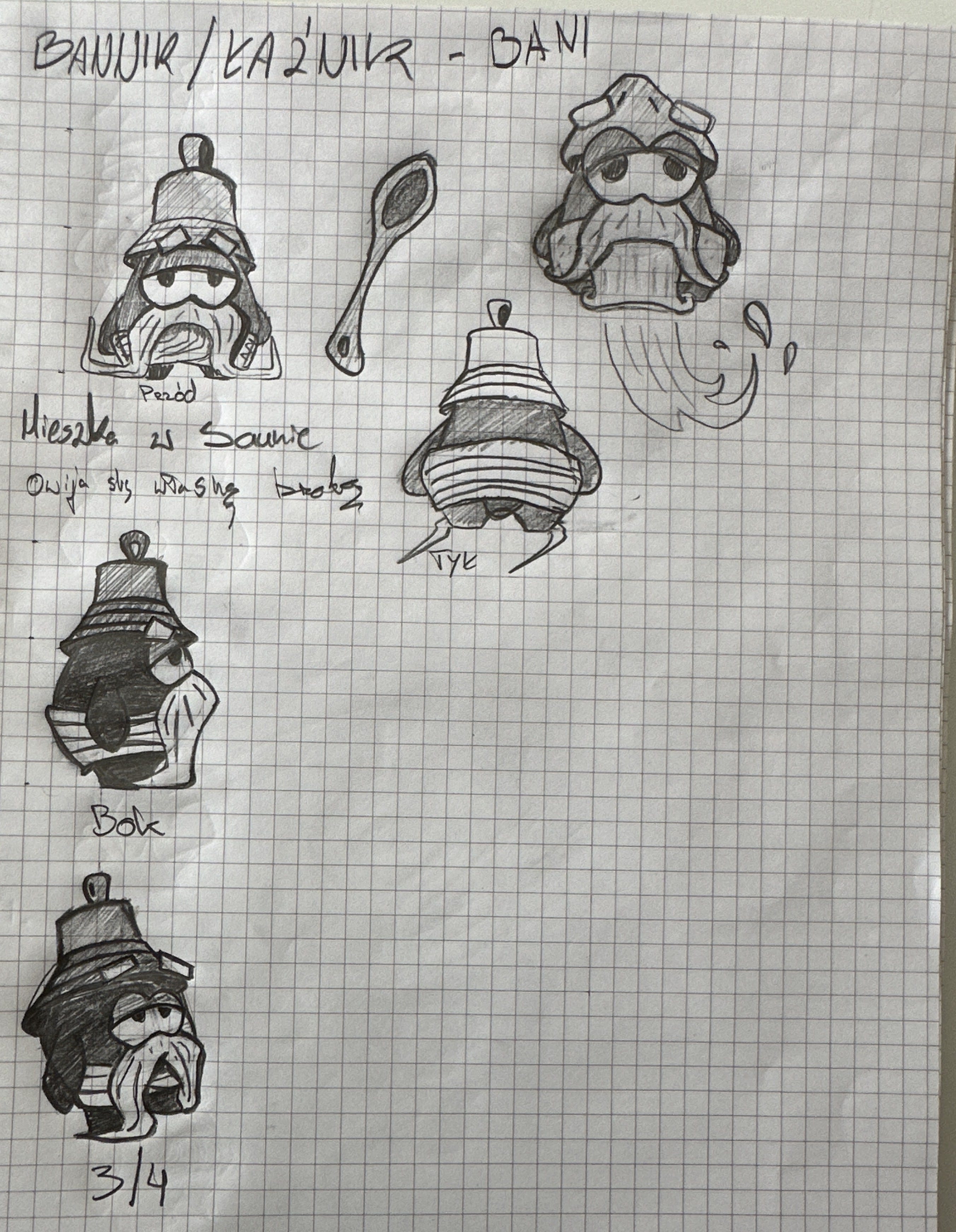
When I started drawing him, that difference became the most important thing to hold onto.
I did not want Bannik to feel like Domovik with a different prop. I wanted him to feel more local to his own space — more shaped by the bathhouse itself. That is why I kept returning to objects and forms associated with bathing: the bucket-like hat, the beard-wrapped towel around his body, the sleepy but slightly watchful expression, the sense that he belongs somewhere warm, enclosed, and a little uncomfortable.
What helped me most in thinking about the design was the idea that these beings are often defined less by one fixed appearance and more by the place they inhabit. Research on bathhouse-spirit traditions also points in that direction: what matters first is the connection to the bathhouse itself, and only then the visual form that grows out of it.
Because of that, drawing Bannik became less about illustrating folklore literally and more about trying to condense a place into a character.

I wanted him to feel old, compact, and slightly severe, but not overly dramatic. A figure that could still fit the broader tone of Ubože, while carrying a different atmosphere than the beings connected more directly to the house. Less familiar, perhaps, and a little more awkward. Not necessarily hostile, but not fully comforting either.
That balance was important to me.
Part of the work here was simply spending time with the figure long enough for that tone to become visible — sketching, simplifying, adjusting shapes, and trying to understand what should stay and what should be reduced. So this was not only a matter of “designing a character,” but of trying to give proper form to something that already had a cultural and symbolic weight behind it.
For now, this is the direction that feels right.
Not as a final answer, and not as a perfect reconstruction, but as a version that begins to place Bannik where he belongs: not in the center of the home, but just beside it, in a room with its own heat, its own rules, and its own spirit.