

Before I could decide how the pieces should move, I had to decide what kind of conflict the game was actually about.
At first, this may sound like a strange order of work. In an abstract strategy game, one might expect the pieces to come first: movement, capture, range, balance, then maybe a theme added on top. But for this project, the board itself had already suggested something more specific.
A hexagonal board is not neutral. It does not naturally point toward two armies facing each other across a single front. It suggests several directions at once. It suggests pressure from the side, unstable alliances, shared centers, and conflicts that are not always reducible to one clean opposition.
That mattered to me from the beginning.
I did not want to simply design “chess on hexes.” Chess is one of the great abstract games, and its clarity is part of its power. But it is also built around a very particular symbolic structure: two sides, two kings, two armies, one direct opposition. That structure creates enormous intellectual depth, but it also narrows the world into a duel.
I wanted something slightly different.
I wanted a game that could still contain the intensity of a duel, but not be limited by it. A game where two players could face each other directly, but where the same system could also expand into three, four, or six competing powers. A game where conflict would not only mean destroying the enemy, but also knowing when another player’s war creates an opening for you.
In that sense, the hexagonal board was not just a geometric choice. It was a philosophical one.
The problem with two kings
There is something beautiful about the simplicity of two kings.
It gives the game a clean emotional frame. One side against another. One mind against another. One order against another. But real political and historical life rarely works in such a clean way.
Even when wars are fought between two powers, the consequences are almost never limited to those two powers. Neighbors watch. Rivals wait. Allies calculate. A weakening enemy may become useful. A costly victory may make the winner vulnerable. A war between two sides may create the best conditions for a third.
This is one of the things I wanted the game to express abstractly.
Not through diplomacy rules, hidden cards, negotiation phases, or narrative events, but through the board itself. Through the number of possible players. Through spatial pressure. Through the fact that every move may open or close possibilities for someone who is not directly involved in the immediate exchange.
With three players, every capture has a shadow.
With four, geography begins to create natural fronts.
With six, every local conflict risks becoming an invitation.
This does not make the game more “realistic” in a simulationist sense. That was never the goal. It makes the game feel closer to the instability of human conflict: not one line, but several forces pulling at once.
Why the center matters
Once the game moved away from a simple two-sided structure, it needed a different kind of objective.
If the goal were only to eliminate the enemy leader, the game would remain too close to a classical duel. It would still be about removing the opposite king. But on a board with several possible powers, I wanted the objective to be something more public, more exposed, and more symbolically charged.
That is how the Throne became central.
The Throne is not owned at the beginning. It does not belong to any player by default. It is not the private property of one royal line. It sits in the middle as a claim, a temptation, and a danger.
To stand on the Throne is to say: I am no longer only defending my group. I am trying to rise above the others.
That creates a different kind of tension. The player who moves toward the center becomes visible. The leader who reaches the Throne becomes powerful, but also vulnerable. Victory requires not only arrival, but endurance. The claim must be held long enough for the rest of the board to react.
This was important to me because I did not want power to feel automatic.
A ruler does not exist in isolation. A ruler exists because others accept him, fear him, need him, follow him, fail to stop him, or are too divided to resist him. The Throne in the game is a simplified version of that idea. It is not enough to want authority. You have to survive the moment when that desire becomes visible.
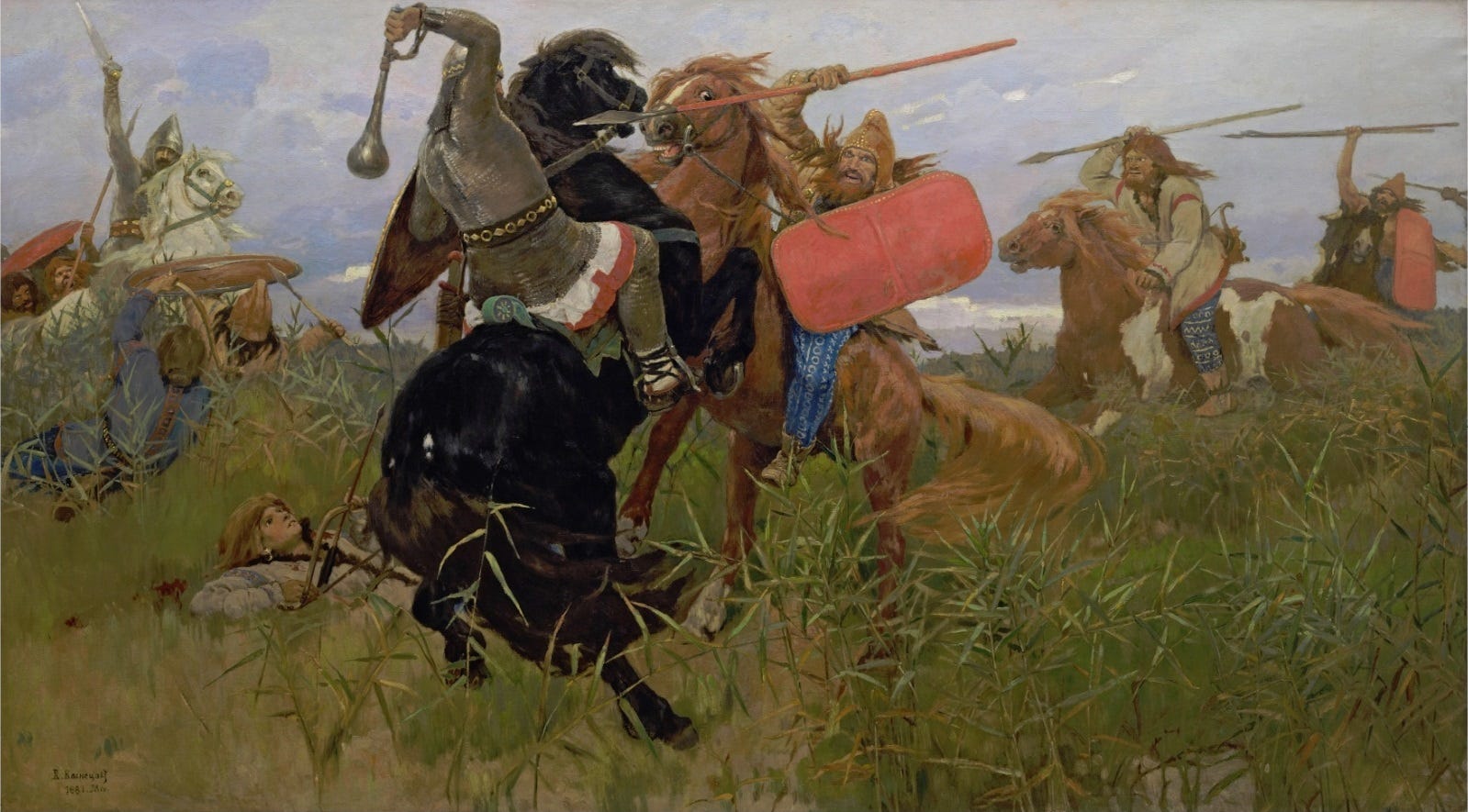
Why the leader is a Knyaz
The central figure of the game became the Knyaz.
The word itself was part of the attraction. In English, it is usually rendered somewhere around “prince,” “duke,” or sometimes “king,” depending on historical context. Historically, the Slavic title changed meaning over time: it could refer to a tribal chieftain, a ruler, or later a noble title within more developed state structures.
That ambiguity is exactly what I like about it.
“Knyaz” does not feel identical to “king.” It carries royalty, but not necessarily the full weight of an already completed monarchy. It suggests someone on the edge between leadership and sovereignty. Someone who may command a warband, rule a people, or aspire to something greater — but who is still not simply born into unquestioned sacred authority.
For this game, that distinction matters.
The Knyaz is not a divine king placed above the world. He is a claimant. A leader. A figure whose importance comes from what he might become. He is not powerful because heaven has already settled the matter. He is powerful because the board has not.
That makes him ideal for a game about competing claims.
Each player does not begin as the rightful monarch of the world. Each begins with a group, a position, and a possibility. The Throne is the thing they are moving toward. Authority is not assumed; it is contested.
Slavic influence without turning the game into a history lesson
The Slavic influence in the game is not meant to turn it into a direct historical reconstruction.
This is not a simulation of one tribe, one century, one war, or one political system. It is still an abstract strategy game. But abstract games can carry cultural memory in their structure, names, and metaphors.
What interested me was the tension between community and leadership.
Early Slavic societies are often described as decentralized tribal societies, with gradual consolidation, chiefdoms, and later more centralized political forms developing over time. The historical picture is complex and varies by region, but the general movement from looser tribal structures toward stronger centers of power is important.
There is also the tradition of assemblies. The veche, for example, was a popular assembly known especially from medieval Rus’ contexts. Britannica describes it as a characteristic institution from roughly the 10th to 15th centuries, probably rooted in earlier deliberative bodies among Slavic tribes, and in some towns sharing power with princes and aristocratic councils.
I do not want to overstate this or romanticize it. No early society was a modern democracy. No culture was purely egalitarian. Power, hierarchy, violence, prestige, wealth, and family position existed everywhere in different forms.
But there is a useful design idea here: leadership does not always begin as permanent monarchy. Sometimes it emerges from need. War requires coordination. Defense requires command. A group may choose or tolerate a leader in crisis, then resist the same leader if he tries to turn temporary command into lasting superiority.
That tension became one of the hidden foundations of the game.
The Knyaz is necessary.
The Knyaz is dangerous.
The Knyaz protects the group.
The Knyaz also tries to rise above it.
This is much more interesting to me than a king who is simply king because the game says so.
This is not meant to be a historical reconstruction of Slavic warfare or society. It is a symbolic design language. The game takes inspiration from certain historical tensions — leadership, community, prestige, claim, and conflict — and translates them into abstract pieces on a board.
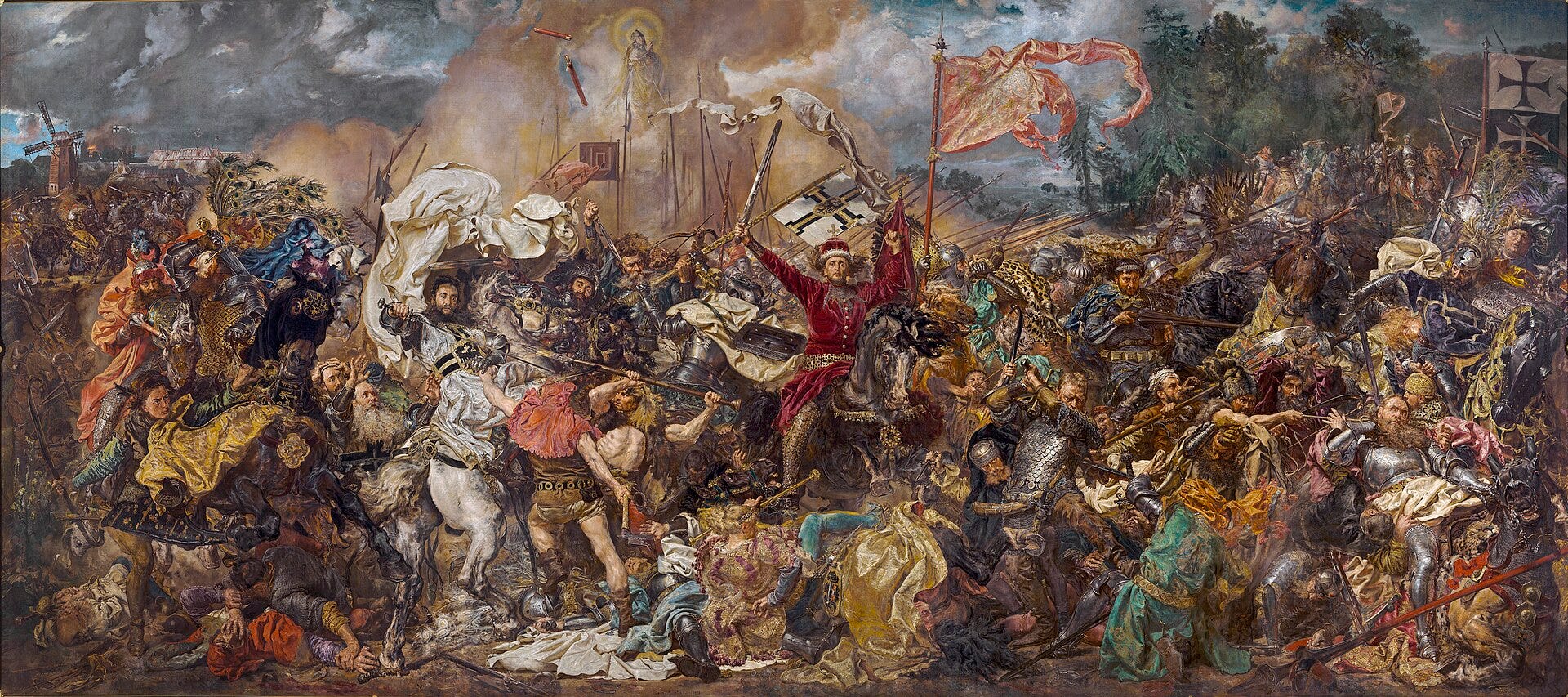
The warband before the kingdom
This is also why I think of the player’s forces less as a formal army and more as a warband. There is no place on eartg where we could find kingdom before the people.
A kingdom feels complete. A warband feels like something still forming. It has hierarchy, but not yet bureaucracy. It has loyalty, but not yet the full machinery of state. It is personal, dangerous, unstable.
That scale fits the game better.
The pieces are not anonymous soldiers of a fully established empire. They are the people around a claimant: fighters, shield-bearers, archers, raiders, elite figures, and the leader at the center of their loyalty. They do not represent an entire civilization. They represent the moment before authority hardens into institution.
This also helps explain the tone I want. The game should feel elevated, but not detached from human struggle. It should have the symbolic weight of crowns, thrones, and sovereignty, but still remain close to the ground: movement, protection, ambush, sacrifice, pressure.
The Throne gives the game height.
The warband keeps it human.
Why not a hunt?
At an earlier stage, I considered a different center for the board.
Instead of a Throne, the middle could have represented prey, treasure, a sacred animal, or something closer to a hunt. That would also make sense in a more primal or communal vision of the game. A group moving toward the center to secure food, glory, or survival has its own strength as an image.
But eventually that felt too low for the kind of tension I wanted.
The hunt is older than the crown. In practical terms, it may even be more important. A human group needs food before it needs royal symbols. But games do not work only through practical importance. They also work through myth, prestige, and the emotional charge of a goal.
The Throne does something that prey does not.
It transforms the center into an idea.
The player is not only trying to take something valuable. He is trying to claim a position above the others. That makes the act more dangerous and more ironic. Everyone may need leadership, but everyone may also fear the one who succeeds too much.
That is why the Throne stayed.
A different answer to chess
Chess entered Europe through a long transformation from earlier games such as chaturanga and shatranj; chaturanga is generally treated as an early Indian ancestor of chess and related Asian chess traditions, with pieces connected to military divisions such as infantry, cavalry, elephants, and chariots.
In that tradition, the board is a battlefield and the king is the decisive figure. My game obviously stands in conversation with that lineage. It would be dishonest to pretend otherwise.
But I am trying to answer a slightly different question.
Not: how can two royal armies destroy each other?
Rather: what happens when several leaders, each backed by their own group, attempt to turn a shared center into personal authority?
That shift changes the meaning of the board.
The game can still be played one against one. In that mode, it keeps something of the classical duel. But it is not limited to that form. The same board can become a triangle of suspicion, a four-sided struggle, or a six-sided field of unstable pressure.
That is why the hexagon matters. It allows the game to preserve the elegance of abstraction while opening the political imagination beyond the binary.
The design principle underneath it all
The practical design principle is simple:
The game should be abstract, but not empty.
I do not want to cover the rules with lore. I do not want every piece to require a paragraph of mythology before the player understands it. But I also do not want the game to feel like pure geometry with decorative names attached at the end.
The names, the board, the Throne, and the pieces should all point in the same direction.
The Knyaz is slow because authority must be carried and protected.
The Throne is central because legitimacy is public.
The hexagon matters because conflict has more than one front.
The warband matters because power begins among people before it becomes a state.
The rules must remain simple because the complexity should emerge from position, not from exception.
That is the foundation I needed before designing the pieces themselves.
Only after that could I ask what each figure should do.
Who protects the Knyaz?
Who breaks the line?
Who controls distance?
Who holds space?
Who creates sudden pressure?
Who makes the center survivable?
Those questions lead naturally into the next layer of the project: the pieces, their movement, and their roles inside the warband.
But before the pieces, there had to be a claim.
And before the claim, there had to be a Throne.
With that foundation in place, the next question became much more practical: if the game is about a Knyaz, a Throne, and a warband moving through contested space, what kinds of figures should this warband actually contain?