

Not in the house, not beside the stove, not in the bathhouse, and not among the buildings where things are stored and kept. Polevik belongs to the open field — to a place with no ceiling, no shelter, and no clear boundary between work and weather. In Slavic folklore, the polevoy is described as a field spirit, one of the beings tied not to the home itself, but to a specific part of the lived landscape.
That changes everything.
A figure of the house can feel protective. A figure of the bathhouse can feel enclosed. But a figure of the field has to carry something else: distance, exposure, heat, and labor. Britannica links Polevik to Poludnitsa, the noon spirit of the field, which already says a lot about the atmosphere around him. This is not just cultivated land. It is land under the sun, under effort, and under a certain kind of tension.
What I liked most while working on him was that he does not come down to us as one perfectly fixed image. In some descriptions he is black like the earth, with grass for hair. In others he appears in white. He is seldom seen, which makes him less like a stable portrait and more like a presence tied to the field itself. In some places, offerings were left to him for fertility, which places him close not only to the land, but to its yield.
That gave me a lot of freedom, but also a very clear direction.

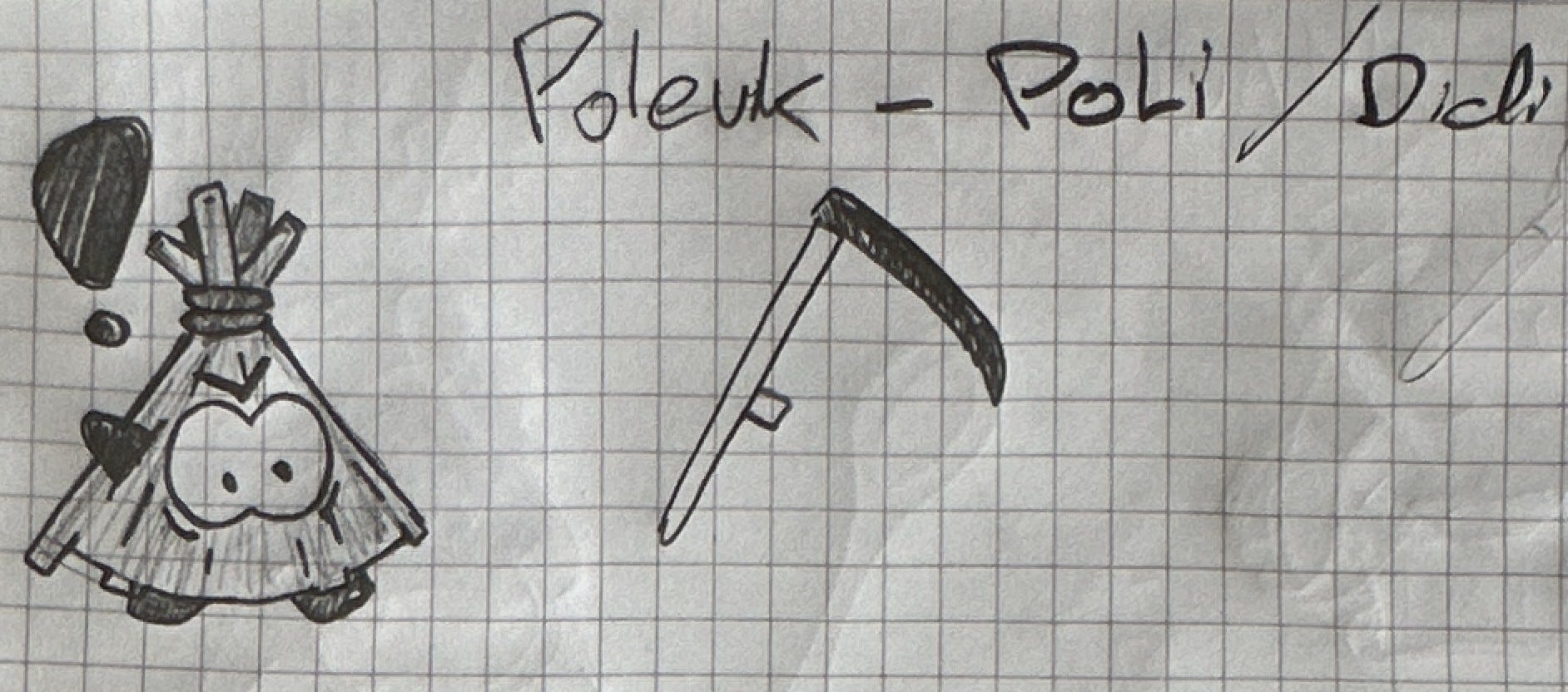
I did not want him to feel like another domestic spirit moved outdoors. I wanted him to feel as if he had risen from the crop itself. That is why the design began leaning toward a sheaf-like shape — something simpler, more vertical, more bound to harvest than to architecture. The early sketch already pushed me in that direction. Once the sickle appeared beside him, the whole figure became easier to place. He stopped feeling like a generic creature and started feeling field-born.
That was really the point of this one.
Not to make him complicated, and not to over-explain him, but to let the character carry the field in a direct way. Grain, cutting, season, exposure. Something a little dry, a little watchful, and a little strange, but still readable enough to belong inside Uboże.
I also liked that Polevik naturally shifts the mood of the whole series.
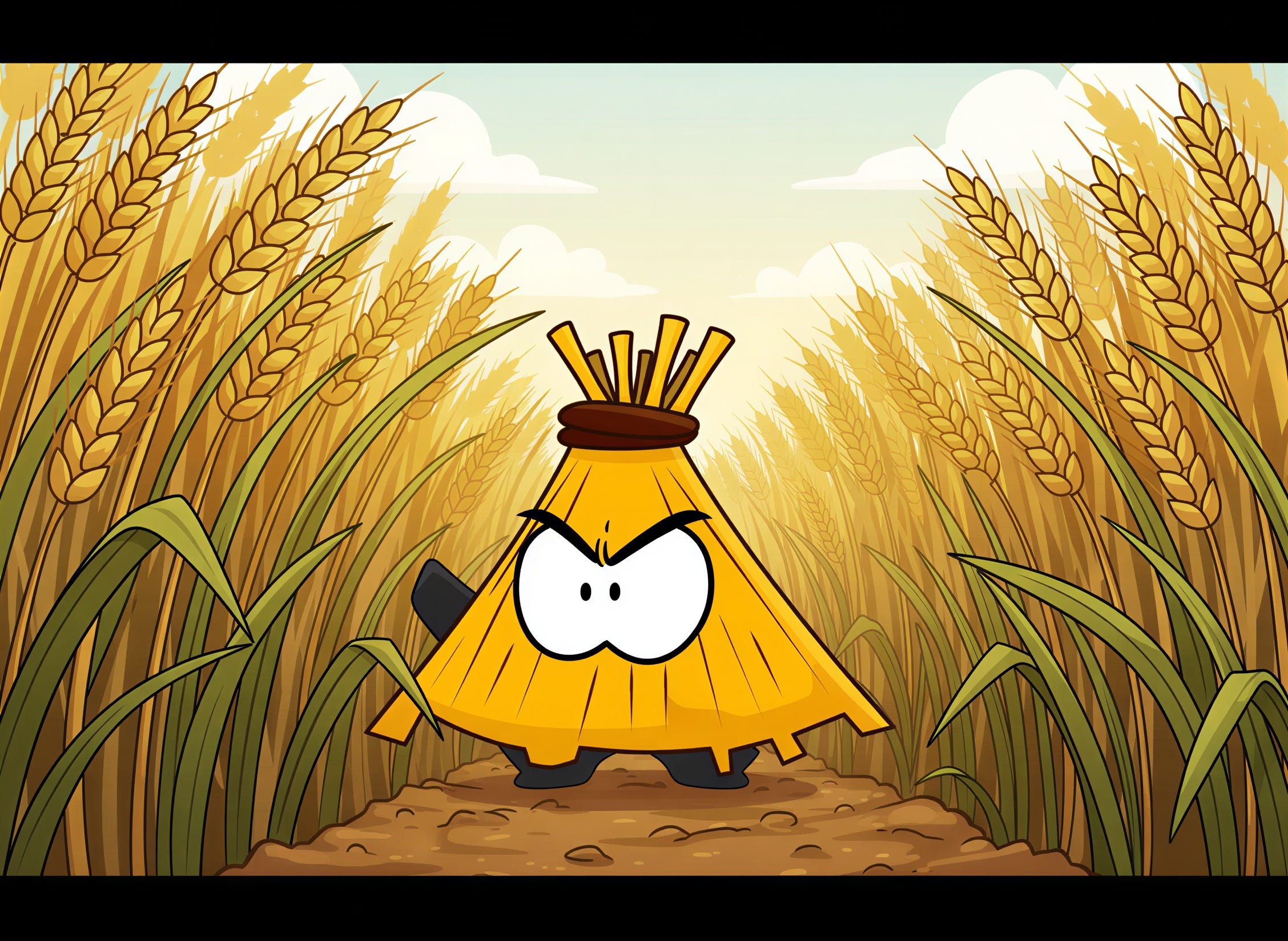
He is less interior than the others. Less domestic. Less tied to corners, thresholds, or enclosed rooms. He stands in a wider space, and because of that he brings a different rhythm with him. More air around the figure. More distance. Less shelter.
So in this case, a lot of the work was simply about reducing him until only the essential things were left.
Not adding more detail, but finding the shortest visual route to the idea. A spirit of the field does not need much before he starts to make sense. A shape close to grain. A hint of harvest. A body that feels more like part of the crop than a visitor standing in it.